
A Real Taste of Life at Farmers Markets in Cappadocia
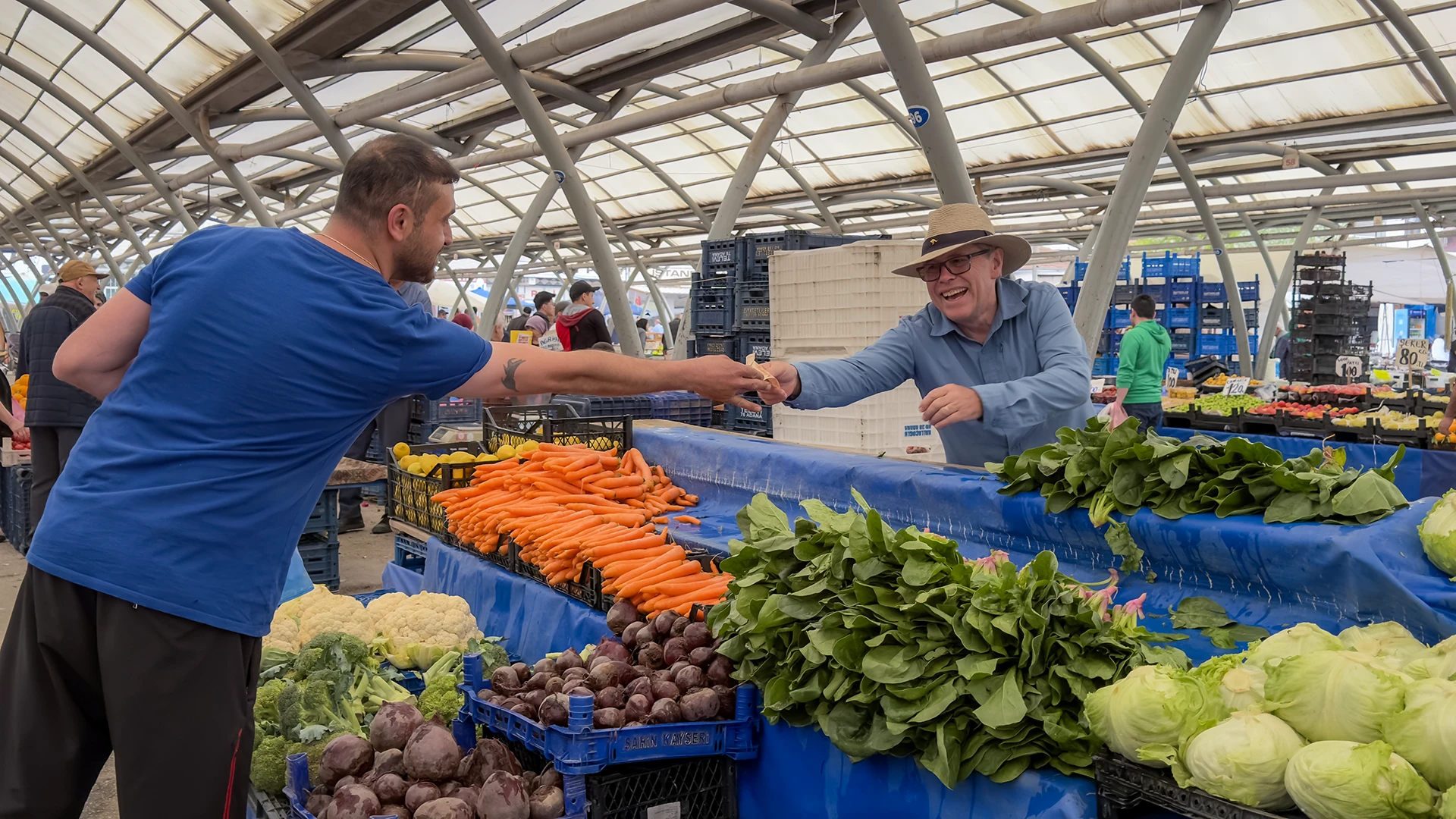
Farmers markets in Cappadocia begin long before most visitors start their day. Farmers arrive from nearby villages with crates of seasonal produce, vendors arrange their stalls before sunrise, and regular shoppers already know which seller has the sweetest grapes, the freshest tomatoes, or the best white cheese. For many local families, market day remains an important weekly routine rather than a tourist attraction.
Older women push their pazar arabası (market carts) filled with the week’s groceries, sometimes balancing bags (poşet) on their arms. A lost child cries at a fruit stall, briefly separated from their mother in the crowd. Mothers with strollers hold their children’s hands because the stroller is now packed with produce. Voices call out, “Can’t you give four kilos for 50 lira?” as shoppers carefully select the best of what the season offers.
These scenes unfold weekly and reveal why farmers markets in Cappadocia remain an essential part of daily life.

Why Farmers Markets Matter to the Community
Farmers markets in Cappadocia play an important role in the region’s daily life and local economy. While visitors often see them as places to buy fresh produce, for many local residents they remain an essential part of the weekly routine. Market day is when households stock up on fruit, vegetables, cheese, olives, spices, legumes, and other everyday necessities.
Many vendors travel from nearby villages and farming communities, bringing seasonal products harvested only days earlier. Depending on the time of year, stalls may be filled with grapes, apricots, apples, pears, pumpkins, walnuts, fresh herbs, or vegetables grown in the fertile valleys and plains surrounding Cappadocia. The changing seasons are reflected directly in what appears on the market tables.
The markets also serve an important social function. Friends stop to chat between stalls, neighbors exchange local news, and long-time customers return to the same vendors week after week. These everyday interactions remain an important part of Turkish hospitality and community life. Many shoppers know exactly which stall sells the sweetest fruit, the freshest village eggs, or the best homemade tomato paste. These relationships have often been built over many years.
For travelers, visiting farmers markets in Cappadocia offers an opportunity to observe a side of the region that remains largely unchanged by tourism. Beyond the fairy chimneys, cave hotels, and museums, the markets reveal how local families shop, cook, and maintain traditions that continue to shape daily life. Spending time among the stalls often provides a deeper understanding of the region than simply purchasing a few souvenirs.
Whether buying seasonal produce, tasting local specialties, or simply observing the rhythm of market day, visitors gain a genuine glimpse into the community that calls Cappadocia home.
What to Buy at Farmers Markets in Cappadocia
What you find at farmers markets in Cappadocia depends entirely on the season, making each visit different from the last. The changing harvests reflect the agricultural rhythms of Central Anatolia, and many local residents still plan their shopping around what is freshest at the market.
In spring and early summer, stalls begin to fill with strawberries, green plums, cherries, and apricots. As temperatures rise, peaches, melons, and watermelons become common. Late summer and autumn bring some of Cappadocia’s most anticipated products, including grapes, apples, pears, quinces, and pumpkins. During the winter months, oranges and mandarins appear in abundance, alongside storage crops that remain staples of local kitchens.
Grapes deserve special attention. Vineyards have been part of Cappadocia for thousands of years, and local markets often feature table grapes, raisins, grape molasses (pekmez), and other grape-based products during the harvest season. Dried apricots, figs, and raisins are also widely available throughout the year. The same vineyards that supply local markets have also shaped Cappadocia’s long winemaking tradition.
Many visitors are surprised by the variety of traditional pantry items sold at the markets. Homemade tomato paste, village-made jams, pickles, dried beans, chickpeas, lentils, bulgur, and noodles prepared by local families can often be found alongside fresh produce. These products remain essential ingredients in many Cappadocian homes. Many of these ingredients continue to appear in regional recipes served throughout Türkiye.
Nuts and seeds are another highlight. Walnuts, hazelnuts, pistachios, and roasted pumpkin seeds are commonly sold, particularly during autumn and winter. Local honey, honeycomb, and free-range farm eggs are also popular purchases.
Vegetables follow the seasons. Tomatoes, cucumbers, peppers, eggplants, zucchini, spinach, and lettuce are abundant during the warmer months, while onions, garlic, carrots, potatoes, pumpkins, and squash become more prominent during the colder part of the year.
Dairy stalls offer village cheeses made from cow, goat, or sheep milk, along with thick yogurt and traditional butter. Many local families still purchase these products weekly rather than from supermarkets.
Beyond food, farmers markets in Cappadocia also sell household goods used in everyday life. Kitchen tools, textiles, buckets, ladles, pots, pans, and other practical items share space with the produce stalls, reflecting the market’s role as a gathering place for the community rather than simply a destination for visitors.
Farmers markets in Cappadocia operate year-round, with products changing throughout the seasons according to local harvest cycles.
Are Farmers Markets in Cappadocia Organic?
Not necessarily. While many products sold at farmers markets in Cappadocia come from small farms and nearby villages, they are not automatically certified organic. In Türkiye, locally grown and village-produced foods are often associated with traditional farming practices, but this is different from official organic certification.
One of the advantages of shopping at local markets is the opportunity to speak directly with vendors about where their products come from and how they are grown. Many sellers are happy to explain their farming methods, harvest seasons, and production processes.
For travelers seeking fresh, locally produced food, farmers markets in Cappadocia offer an authentic shopping experience. However, visitors specifically looking for certified organic products should not assume that all market produce meets formal organic standards.
When and Where to Visit Farmers Markets in Cappadocia
Knowing when to visit farmers markets in Cappadocia helps travelers plan their stay more effectively. Each town hosts its weekly market on a specific day:
- Tuesdays in Uçhisar
- Wednesdays in Göreme
- Fridays in Avanos
- Saturdays in Ürgüp
For first-time visitors, the Göreme and Ürgüp markets are often the easiest to access and typically attract a large number of local shoppers alongside visitors.
Most farmers markets in Cappadocia begin early in the morning and continue until early afternoon. The best selection is usually available during the morning hours, when stalls are fully stocked and local residents do most of their shopping. By midday, some of the most popular seasonal products may already be sold out.
Many vendors travel between different towns throughout the week, allowing residents across the region to access similar seasonal products.
Whether purchasing fresh produce or simply walking through the market, visitors encounter a side of Cappadocia shaped by local routines rather than tourism.
Final Thoughts on Farmers Markets in Cappadocia
A visit to a farmers market adds a different dimension to a trip through Cappadocia. Beyond sightseeing, it offers an opportunity to engage with the region through its food, seasons, and weekly routines. Whether you arrive during grape harvest, apricot season, or the winter citrus months, each market reflects a different moment in the annual rhythm of the region.
Travelers interested in exploring the region beyond its major attractions may also find our Cappadocia Travel Guide useful.
WRITTEN BY

Nisa Buket Dağdelen
Operations Director & Tour Guide
LinkedIn Profile

Hüseyin Pekgöz
Founder & Managing Partner
LinkedIn Profile


