Cappadocia Travel Guide : Where to Stay, What to See and How to Plan
Cappadocia Travel Guide : Where to Stay, What to See and How to Plan
This Cappadocia Travel Guide brings together the practical and cultural context you need to plan the region properly, from where to stay and what to see to how many days to allow, when to visit and how to move between the main areas.
Cappadocia is best understood as a connected cultural landscape rather than a collection of separate attractions. Its valleys, fairy chimneys, rock-cut churches, underground cities, villages, vineyards and workshops all reveal different parts of the same story, shaped by geology and centuries of human adaptation.
For a broader perspective on how Cappadocia fits into a wider trip across the country, continue with our Turkey Travel Guide.
Cappadocia is one of Turkey’s most distinctive cultural landscapes, shaped by millions of years of volcanic activity and centuries of human adaptation. Valleys, fairy chimneys, rock-cut churches, underground settlements, vineyards and villages all belong to the same environment, making the region much more than a collection of famous viewpoints. This Cappadocia Travel Guide is designed to help you understand how that landscape fits together before deciding where to stay, what to see and how many days to allow. It brings together the region’s geology, history, major sites, practical planning, local experiences and route structure so that Cappadocia can be approached as one connected destination rather than a checklist of attractions.
For travelers planning a wider route across the country, our Turkey Travel Guide explains how Cappadocia connects with Istanbul, Ephesus, the Mediterranean, Black Sea and Southeastern Turkey. The most rewarding Cappadocia itineraries usually combine three layers: landscape, heritage and living culture. A valley walk reveals the geology. A rock-cut church or underground city explains how people adapted to it. A pottery workshop, vineyard, market or meal shows how regional traditions continue today.
Cappadocia at a Glance
Planning question
Quick answer
How long to stay
3 to 4 full days suits most first-time visitors; 5 days allows a slower regional route.
Best-balanced seasons
April to June and September to October for walking, sightseeing and comfortable temperatures.
Main airports
Nevşehir Kapadokya Airport (NAV) and Kayseri Airport (ASR).
Best base for convenience
Göreme, especially for first-time visitors without a car.
Best base for views and a quieter stay
Uçhisar.
Balloon planning
Book the first available morning so later mornings remain available if weather causes a cancellation.
Planning note: Cappadocia works best when each day follows one geographical direction. Grouping nearby valleys, towns and heritage sites usually improves the experience more than adding extra stops.
Cappadocia is not a single town, archaeological site or valley. It is a broad historical landscape spread across Central Anatolia, where volcanic geology created unusually workable rock formations and successive communities adapted them for settlement, agriculture, worship, storage and protection. That relationship between nature and human use is what gives Cappadocia its character.
Fairy chimneys and eroded ridges are geological formations. Rock-cut churches represent religious and artistic traditions. Underground cities reveal another form of settlement and refuge. Vineyards and dovecotes show how communities worked with the land.
Modern towns such as Göreme, Uçhisar, Ürgüp, Ortahisar and Avanos continue to occupy the same wider landscape. The region therefore becomes much easier to understand when these elements are seen together.
How Cappadocia’s Landscape Was Formed
Cappadocia’s geological story began millions of years before human settlement. Volcanic activity associated with major Central Anatolian volcanic centers, including Mount Erciyes and Hasan Dağı, deposited extensive layers of ash, lava and ignimbrite across the region. Over time, erosion reshaped these materials. Wind, rainfall, freezing, thawing and surface runoff removed softer rock while harder layers resisted erosion for longer.
In certain areas, harder caps protected softer columns beneath them, producing the formations now commonly called fairy chimneys. The process is known as differential erosion. But fairy chimneys are only one part of the geological landscape. The same long-term erosion created: valleys, ridges, cones, cliffs, plateaus, and deeply incised corridors.
For a detailed explanation of their formation and regional variations, continue with our Fairy Chimneys of Cappadocia guide.
Geology Made Rock-Cut Architecture Possible
The geological importance of Cappadocia goes beyond scenery. Certain volcanic layers could be excavated comparatively easily while remaining stable enough to form rooms, passages and larger architectural spaces. Communities took advantage of this characteristic repeatedly. Homes were carved into rock.
Storage rooms developed within hillsides. Churches and monasteries were excavated into cliffs and valleys. Extensive underground settlements developed beneath villages and agricultural land. This is one reason the natural and cultural history of Cappadocia cannot be separated. The geology created the physical conditions. Human communities then transformed those conditions according to changing practical, religious and defensive needs.
UNESCO and the Cultural Landscape of Cappadocia
The international significance of this relationship is reflected in UNESCO’s Göreme National Park and the Rock Sites of Cappadocia World Heritage property. UNESCO recognizes Cappadocia for both its exceptional volcanic landscape and the extensive rock-cut settlements developed within it, including churches, monastic complexes, villages and underground towns.
The recognition is important because it frames Cappadocia as a cultural landscape, not simply a geological attraction. This distinction should shape the way the region is visited. A fairy chimney is more meaningful when its geological formation is understood. A church becomes more significant when its relationship with the valley and settlement surrounding it is clear.
An underground city makes more sense when it is understood as part of a broader system of surface life and subterranean refuge. Cappadocia rewards travelers who connect these layers.
Cappadocia Is Best Understood by Area, Not by Attraction
One of the most common mistakes when planning Cappadocia is choosing individual attractions first and only later looking at how they connect geographically. The region works better in the opposite direction. Sites should be grouped according to area and route. Göreme, Uçhisar and the central valleys form one natural geographical cluster.
Avanos and the northern formations form another. Underground cities and southern routes require a different direction. Ihlara Valley sits much further from central Cappadocia and should not be treated as though it were next to Göreme. Soğanlı, Mustafapaşa and other southern settlements also require their own route logic.
This matters because destinations that appear close on a regional map can still create unnecessary backtracking when combined poorly. A strong Cappadocia itinerary therefore begins with direction, then chooses the sites within it.
Cappadocia’s Main Travel Areas
These are not official tourism zones, but they are a practical way to organize a trip and avoid unnecessary backtracking.
Area
Main places
Best for
Central Cappadocia
Göreme, Uçhisar, Ortahisar, Red Valley, Rose Valley, Pigeon Valley
First-time highlights, Byzantine heritage, valley walks
Canyon walking, rock-cut churches, longer day trips
Why the Valleys Matter
Cappadocia is often experienced from viewpoints, but the valleys reveal far more than panoramas. Walking through them changes the scale of the landscape. Rock formations rise around the trail rather than appearing in the distance. Dovecotes, carved rooms and agricultural terraces become visible.
Churches that are almost invisible from the road appear along cliffs and side valleys. The differences between valleys also become much clearer on foot. Red Valley and Rose Valley combine dramatic volcanic formations with rock-cut heritage and some of the region’s strongest late-afternoon landscapes. Pigeon Valley reflects the long agricultural relationship between dovecotes and vineyards. Love Valley is defined by particularly distinctive erosional formations. Ihlara Valley creates a completely different environment, with the Melendiz River, vegetation and rock-cut churches contained within a deep canyon. For hiking routes, differences between valleys and practical planning, see our complete Valleys of Cappadocia guide.
What to See in Cappadocia
Cappadocia does not have one historic center where the main sights can be covered on foot in a few hours. Its churches, valleys, underground settlements, villages and geological formations are distributed across a wide area, which makes route planning almost as important as deciding what to visit. For a first visit, the strongest itinerary usually combines three different perspectives: a major rock-cut heritage site, time within the landscape itself, and at least one place that explains how communities lived within or beneath that landscape.
Göreme Open Air Museum
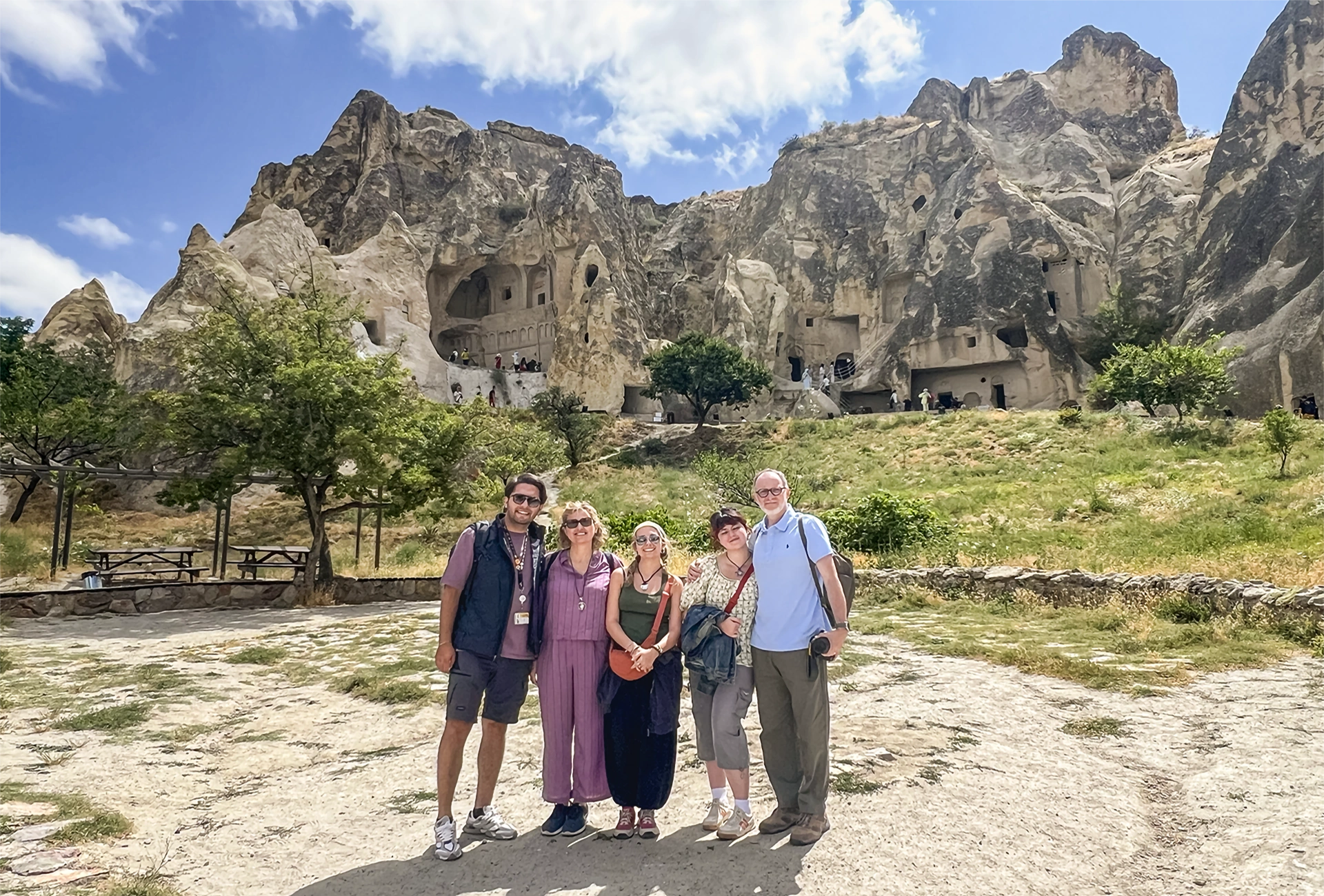
Göreme Open Air Museum is one of the most important places for understanding Byzantine Cappadocia. Rather than a conventional museum building, it is a concentrated group of rock-cut churches, chapels, monastic spaces and communal structures carved into the volcanic landscape. The site is particularly significant for its wall paintings.
Some churches preserve relatively simple geometric and symbolic decoration, while others contain sophisticated narrative fresco cycles depicting scenes from the life of Christ and Christian saints. Together, they reveal different phases of Cappadocia’s religious and artistic development.
Göreme also helps explain why Cappadocia appears on the UNESCO World Heritage List. UNESCO identifies the density and quality of its rock-hewn sanctuaries as exceptional evidence of post-Iconoclastic Byzantine art and places them within a wider landscape of dwellings, villages and underground settlements. For most first-time visitors interested in history, Göreme Open Air Museum deserves considerably more attention than a quick photo stop.
The Valleys Around Göreme and Uçhisar
Cappadocia’s valleys provide a completely different experience from its archaeological sites. Around Göreme and Uçhisar, Rose Valley, Red Valley, Pigeon Valley and Love Valley can be experienced through walks of different lengths, scenic viewpoints and sections of historic pathways. Their value is not limited to hiking. Moving through the valleys reveals details that are difficult to appreciate from a vehicle: carved dovecotes, abandoned rooms, small churches, vineyards, orchards, erosional channels, and the changing structure of the volcanic rock.
This is where Cappadocia begins to feel like a continuous cultural landscape rather than a series of separate attractions. Our Valleys of Cappadocia guide compares the major valleys, walking routes and the character of each area in more detail.
Paşabağ and the Fairy-Chimney Landscape
Paşabağ, also known as Monks Valley, contains some of Cappadocia’s most recognizable fairy-chimney formations. The importance of the area is not simply that the formations are photogenic. Paşabağ makes the process of differential erosion especially easy to observe. Tall columns of softer volcanic material remain protected beneath harder caps, while surrounding rock has gradually disappeared. Some formations were later carved and used by people, creating another example of the relationship between natural geology and human adaptation that defines Cappadocia.
If you want to understand why fairy chimneys developed, how they differ across the region and what their familiar shapes actually represent geologically, see our Fairy Chimneys of Cappadocia guide.
Zelve and the Rock-Cut Settlement Landscape
Zelve offers a different perspective from Göreme Open Air Museum. While Göreme is especially important for Byzantine churches and wall paintings, Zelve helps visitors visualize how an entire community could develop within a landscape of cliffs, caves and interconnected rock-cut spaces. Homes, religious structures, tunnels and communal areas were distributed through several valleys.
The site therefore works particularly well after visitors have already seen Cappadocia’s geology from outside. At Zelve, the relationship between the rock and daily settlement becomes much clearer. The contrast between Göreme’s concentrated religious heritage and Zelve’s broader settlement environment is one reason the two should not automatically be treated as substitutes for each other.
Uçhisar Castle
Uçhisar rises around one of the highest natural rock formations in central Cappadocia. Its interior was progressively carved into rooms, passages and storage spaces, while its elevated position created wide views over the surrounding valleys and volcanic plateau. Today, the principal reason to include Uçhisar is its perspective. From the settlement and its higher viewpoints, the geography of central Cappadocia becomes easier to read.
Göreme lies below, Pigeon Valley stretches between the two towns, and the wider pattern of ridges and valleys becomes visible across the plateau. This makes Uçhisar particularly useful near the beginning of a visit, when travelers are still trying to understand how the region fits together.
The Underground Cities
Cappadocia’s underground settlements reveal the landscape from an entirely different direction. Instead of carving horizontally into cliffs and cones, communities excavated complex systems beneath the surface. The best-known examples are Kaymaklı Underground City and Derinkuyu Underground City.
Although frequently presented as similar attractions, their spatial character differs. Kaymaklı spreads more horizontally through interconnected spaces, while Derinkuyu creates a much stronger impression of vertical descent. Both include architectural features associated with storage, animals, food production, ventilation, religious life and defence. They also belong to a much larger underground landscape extending well beyond these two famous sites.
Our Underground Cities of Cappadocia guide examines their dating, engineering and regional distribution, including Özkonak, Mazı, Tatlarin and underground settlements across Aksaray, Kayseri and Niğde. Kaymaklı and Derinkuyu are also included among the individual components of the UNESCO World Heritage property, reinforcing that Cappadocia’s subterranean architecture belongs to the wider historic landscape rather than standing apart from it.
Avanos
Avanos introduces another layer of Cappadocia: a living town shaped by the Kızılırmak River and a long pottery tradition. Its character is quite different from Göreme. The town center, riverfront, workshops and residential streets make Avanos useful for travelers who want to move beyond archaeological sites and viewpoints. Pottery remains its strongest cultural association.
Local clay traditions developed around the materials available in the Kızılırmak basin, and workshops continue to connect production with skills passed through generations. A good workshop should be approached as an opportunity to understand technique and local craft culture rather than simply as a shopping stop. For a wider look at pottery, cooking and other hands-on traditions, see our Best Workshops in Cappadocia guide.
Mustafapaşa
Mustafapaşa, historically known as Sinasos, offers one of Cappadocia’s clearest examples of a settlement shaped by different communities and architectural traditions. Its stone houses, religious buildings and historic streets differ noticeably from the cave-dominated image normally associated with the region. The town is especially valuable for understanding Cappadocia in the late Ottoman period, when Muslim and Greek Orthodox communities lived within the same broader social and economic landscape.
Mustafapaşa therefore adds something that fairy chimneys and underground cities cannot. It shows Cappadocia as a place of settlement history, architecture and community memory, not only geology and early Christianity.
Soğanlı Valley
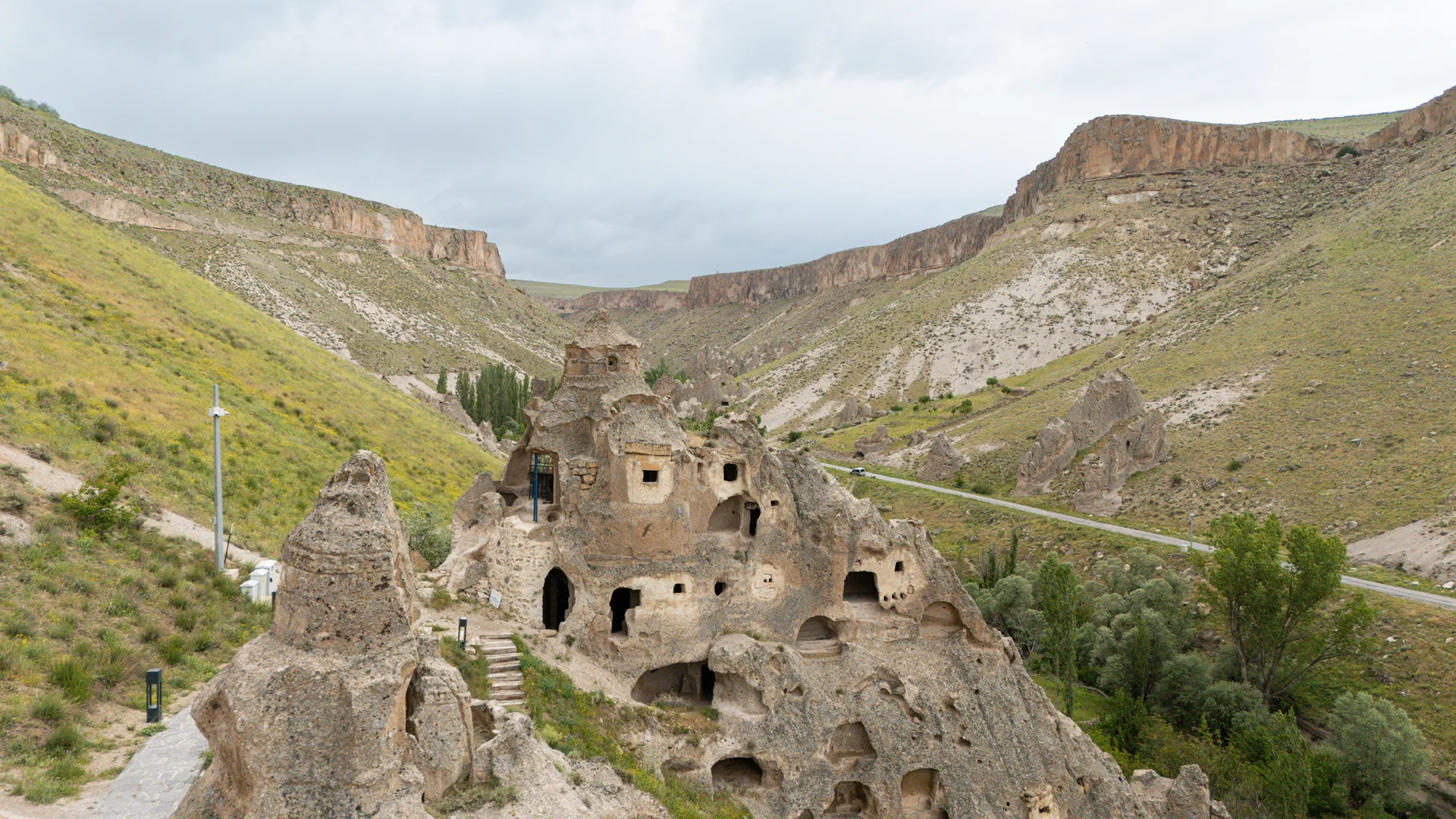
Soğanlı lies south of the central Cappadocia tourism corridor and rewards travelers who have enough time to move beyond Göreme and its immediate surroundings. The valley contains rock-cut churches, dovecotes and settlement remains dispersed through a quieter landscape. UNESCO includes Soğanlı among the individual rock sites forming part of the Göreme National Park and Rock Sites of Cappadocia World Heritage property.
Its importance lies partly in the way the archaeological features remain connected with the wider rural environment. Rather than moving between highly concentrated monuments, visitors encounter churches and carved spaces as elements within the valley itself. That slower relationship between landscape and heritage makes Soğanlı particularly worthwhile on a longer Cappadocia itinerary.
Ihlara Valley and Selime
Ihlara Valley sits significantly farther from Göreme than many first-time visitors expect. It should therefore be planned as part of a dedicated southern or western route rather than added casually between central Cappadocia sights. The Melendiz River runs through the canyon, creating a greener environment that contrasts strongly with the open volcanic valleys around Göreme. Rock-cut churches appear along the cliffs, combining Byzantine heritage with one of Cappadocia’s most distinctive walking landscapes.
At the northern end of the wider valley route, Selime introduces monumental rock-cut architecture on a very different scale. Together, Ihlara and Selime show how diverse Cappadocia becomes once the itinerary moves away from its central tourism corridor.
What Should First-Time Visitors Prioritize?
A first visit does not need to include every famous site. Trying to do so usually creates too much driving and too little time to understand what is being seen. For most travelers, a strong first experience should include: one major Byzantine heritage site, such as Göreme Open Air Museum; one underground city, usually Kaymaklı or Derinkuyu; time inside at least one valley, rather than seeing the landscape entirely from viewpoints; one area focused on living culture, such as Avanos or a historic village; and enough unstructured time to experience Cappadocia without moving constantly between stops. The priority should be variety of understanding rather than quantity of attractions.
A traveler who visits one underground city carefully, walks through a valley, understands the paintings at Göreme and spends time in a local settlement will usually come away with a clearer picture of Cappadocia than someone who moves quickly through ten unrelated stops.
How Many Days Do You Need in Cappadocia?
The ideal length of a Cappadocia visit depends less on how many attractions you want to collect and more on how much variety you want to experience. A rushed itinerary can cover the major highlights in two days, but the region becomes much more rewarding once there is enough time to combine heritage, landscape, local culture and slower moments between them. Two to three days can cover the essential highlights, while four days or more creates a more balanced pace and makes it easier to combine heritage, landscape and local experiences.
Time available
Best approach
2 days
Essential introduction: central Cappadocia plus one underground-city or southern route.
3 days
Strong first visit with heritage, valleys, an underground city and living culture.
4 days
Best balance for most travelers, with room for a longer walk or cultural experience.
5 days
Better for Ihlara, Soğanlı, Mustafapaşa, longer hikes and a slower pace.
Is 2 Days Enough for Cappadocia?
Two full days can work for travelers with limited time. A strong two-day plan should focus on contrast rather than quantity. One day can combine central Cappadocia with places such as Göreme Open Air Museum, Uçhisar and nearby valleys. The second can move toward an underground city and a different geographical area.
A hot air balloon flight can usually be scheduled before daytime sightseeing, but it should never be treated as guaranteed. Weather cancellations are possible, so placing the flight on the first available morning gives you a better chance of rescheduling if necessary. With only two days, avoid trying to include every major valley, multiple underground cities and distant areas such as Ihlara or Soğanlı unless one of them is a specific priority. Two days gives you an introduction rather than a complete view of the region.
3 Days in Cappadocia
Three days is a strong minimum for most first-time visitors. It allows Cappadocia to be divided into distinct geographical and thematic days instead of compressing unrelated sites together. A balanced structure could include:
Day 1: central Cappadocia, Göreme Open Air Museum, Uçhisar and one or two valley areas
Day 2: an underground city combined with southern Cappadocia
Day 3: Avanos, northern landscapes, walking, a workshop or another cultural experience
This structure gives enough time to experience Cappadocia from several perspectives: above ground, below ground, through history, and through living culture. Our 3 Days Cappadocia Tour follows this broader principle of combining different parts of the region rather than repeating similar attractions.
4 Days in Cappadocia
Four days creates a noticeably different travel rhythm. The main sights can still be included, but there is less pressure to move immediately from one stop to another. The additional day can be used for a longer valley walk, a village such as Mustafapaşa, Soğanlı, a cooking or pottery experience, wine tasting, or simply more time in areas already included in the itinerary. This is also where Cappadocia becomes easier to personalize.
Travelers interested in archaeology can spend more time at churches and underground settlements. Those who prefer nature can dedicate more of the itinerary to valleys. Photography-focused travelers gain more flexibility around sunrise and late-afternoon light. Cultural travelers can incorporate workshops, local food and village environments without sacrificing the major heritage sites. For many visitors, three to four full days provides the best balance between coverage and pace.
5 Days in Cappadocia
Five days is appropriate for travelers who want to move beyond the standard central route. The additional time makes more distant parts of the region practical without forcing them into already crowded days. A longer itinerary can incorporate: Ihlara Valley, Selime, Soğanlı, Mustafapaşa, lesser-visited underground settlements, longer hikes, workshops, wine experiences, and more flexible time around changing weather.
It also creates room for experiences that do not fit neatly into sightseeing schedules. A meal that lasts longer than expected. A workshop where conversation becomes as important as the activity. A valley walk that continues because the light is particularly good.
These are small differences operationally, but they often become the moments travelers remember most clearly. Our 5 Days Cappadocia Tour is designed for travelers who want this broader regional depth.
For travellers who want those five days to place greater emphasis on walking and the landscape itself, the Cappadocia Hiking Tour • Valleys & Local Experiences follows a more active route. The itinerary combines longer hikes through Ihlara Valley and Avla Canyon with Red, Swords and Görkündere valleys, while still including Kaymaklı Underground City, Göreme Open Air Museum, Soğanlı Valley, Paşabağ and Zelve.
How to Structure Your Days in Cappadocia
The most efficient Cappadocia itinerary groups places by geography. This reduces unnecessary driving and gives each day a clearer character. Central Cappadocia. A central route can include: Göreme, Göreme Open Air Museum, Uçhisar, Pigeon Valley, Red Valley, Rose Valley, and nearby viewpoints. These places connect naturally and work well together. Northern Cappadocia. A northern route can focus on: Avanos, Paşabağ, Zelve, and surrounding geological formations. This area works particularly well when combined with pottery or another cultural experience in Avanos.
Southern Cappadocia. Southern routes can include: Kaymaklı or Derinkuyu, Mustafapaşa, Soğanlı, and other villages or archaeological landscapes depending on the itinerary. This part of the region combines subterranean heritage with historic settlements and a more rural atmosphere.
Western Cappadocia. Ihlara Valley, Selime and the broader Aksaray side require more driving from Göreme and should usually form their own day. Trying to add Ihlara to a central Cappadocia itinerary creates unnecessary transit and reduces the time available within the valley itself.
Should You Follow the Red, Green or Blue Tour Routes?
The terms Red Tour, Green Tour and Blue Tour are widely used in Cappadocia, but they should be understood as tourism route conventions rather than official geographical divisions. The names are useful because they roughly group sites by direction. However, itineraries vary between companies. A Green Tour may include different stops depending on the operator.
The same applies to Blue and Red routes. For that reason, the name matters less than the actual sequence of sites. When comparing tours, look at which underground city is included, how much time is allocated to each location, how much driving is involved, whether walking is included, and whether the itinerary repeats places you are already visiting independently.
Should You Explore Cappadocia Independently or With a Guide?
Both approaches can work. Independent travel is particularly suitable for: valley walks, viewpoints, town centers, restaurants, and experiences where you want complete control over timing. The region is also rewarding to explore slowly without interpretation at every moment. Guiding becomes more valuable at places where the visible architecture represents only part of the story.
At Göreme Open Air Museum, a guide can help explain the chronology and iconography of the churches. Inside an underground city, interpretation clarifies why individual rooms, shafts and defensive features were arranged as they were. At historic settlements, local context can reveal connections that are difficult to identify from architecture alone. The strongest approach is often a combination. Use expert interpretation where historical context materially improves the experience, then preserve independent time for walking, photography, meals and unscheduled exploration.
Private Touring vs Group Touring in Cappadocia
The main advantage of a private itinerary is flexibility. Cappadocia changes considerably according to: weather, crowd levels, balloon operations, walking conditions, season, and individual interests. A private route can adapt around those variables. It also makes it easier to spend more time at places that matter to you and less time at stops that do not.
Group tours can be practical for travelers seeking a predefined route and a lower per-person cost, but they usually operate around fixed timing and shared priorities. Neither approach is automatically better. The correct choice depends on how much control you want over pace, interpretation and daily structure.
For travelers looking at the wider range of tailor-made options, our Private Turkey Tours provides the broader framework, while the Highlights of Cappadocia Tour offers a focused introduction to the region.
Leave Space Around the Hot Air Balloon Flight
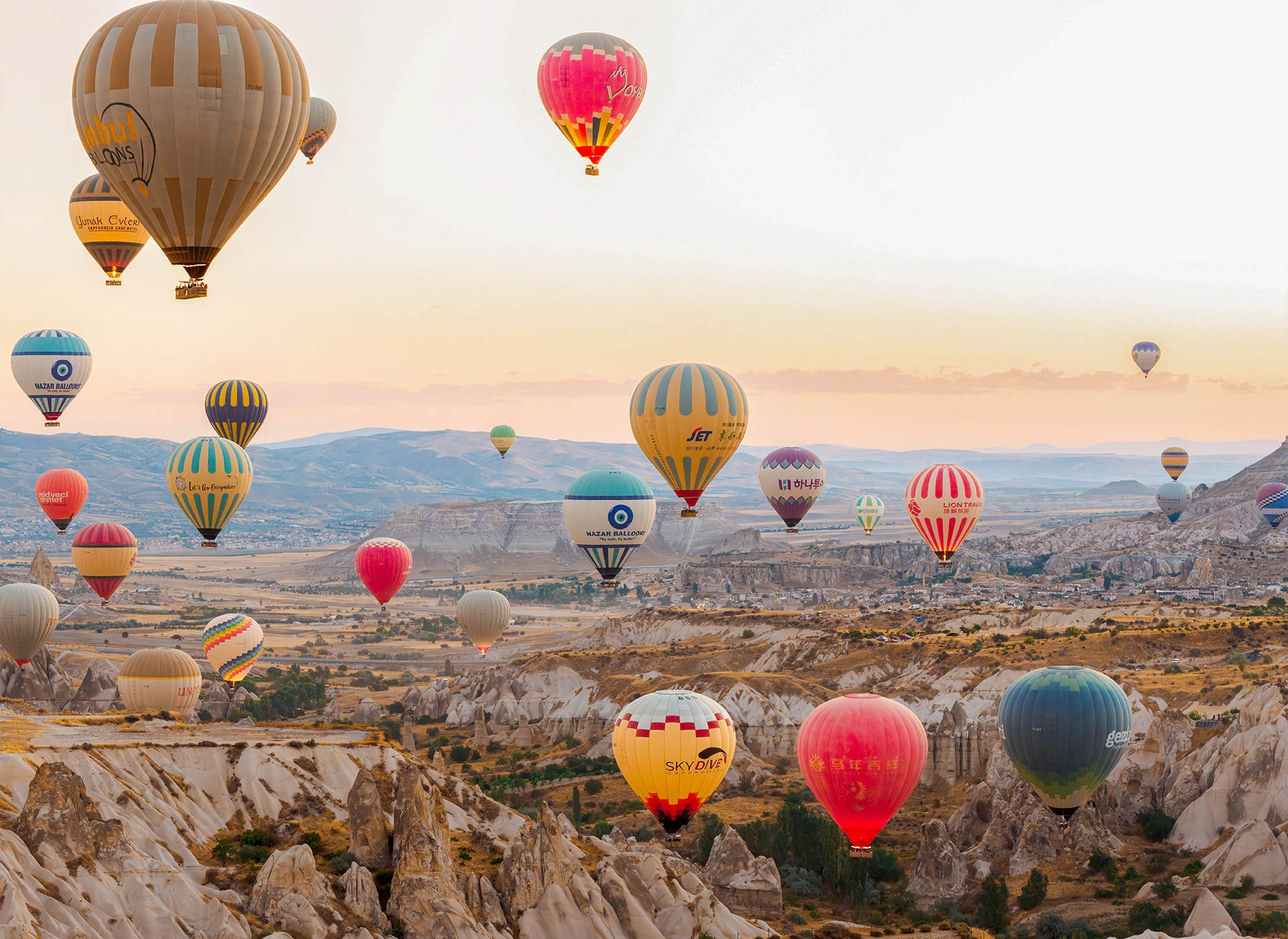
A balloon flight should influence the itinerary, but it should not dominate it. Flights normally take place around sunrise and depend on weather and aviation conditions. A canceled flight can often be moved to another morning if the traveler still has time in Cappadocia. For that reason, scheduling the balloon on the first possible morning is generally the safest approach.
If it operates as planned, the remaining mornings stay free. If it is canceled, later mornings remain available for another attempt. The experience itself usually finishes early enough for normal daytime sightseeing afterward, although a very early start can make an overpacked schedule unnecessarily tiring. For flight structure, weather considerations and planning, see our Cappadocia Hot Air Balloon guide.
Do Not Plan Cappadocia Only Around Famous Stops. Another common mistake is building every day around places already familiar from social media. Cappadocia’s major sights deserve their reputation. But the region becomes much stronger when an itinerary also includes moments that are not simply destinations: walking part of a valley rather than stopping at its viewpoint, watching pottery being shaped in Avanos, spending time in a village, sharing a meal, visiting a vineyard, or allowing enough time to understand one church properly rather than entering several quickly. Cappadocia does not require a long stay to be memorable, but it does benefit from a well-structured stay.
Where to Stay in Cappadocia
Where you stay in Cappadocia shapes the rhythm of the trip more than many first-time visitors expect. Göreme, Uçhisar, Ürgüp and Ortahisar are all practical bases, but they offer different advantages in terms of atmosphere, views, access to valleys, restaurants and evening life. The best choice is therefore not simply the hotel with the most attractive room. It is the combination of property, location and the kind of Cappadocia experience you want.
Staying in Göreme
Göreme is the most convenient base for travelers who want to remain close to the central valleys and the best-known sights. Its main advantages are: easy access to Red Valley, Rose Valley and Love Valley, proximity to Göreme Open Air Museum, a large choice of restaurants and cafés, and a broad range of cave and stone hotels. Göreme also has one of the strongest early-morning atmospheres in Cappadocia.
Depending on wind direction and the day’s flight zone, balloons may pass above or around the town and surrounding valleys, making terraces particularly popular around sunrise. The trade-off is activity. Göreme is one of Cappadocia’s busiest tourism centers, so travelers looking for a quieter village atmosphere may prefer another base. For first-time visitors without a car, however, it is often the easiest place to understand and navigate.
Staying in Uçhisar
Uçhisar sits above the surrounding landscape and offers some of the strongest panoramic views in central Cappadocia. Its elevated position is the defining difference. Hotels and terraces on well-positioned parts of the town can overlook Pigeon Valley, Göreme and the wider volcanic plateau. Uçhisar generally feels calmer and more refined than central Göreme, making it especially suitable for travelers who value: views, quiet evenings, higher-end boutique hotels, and a more residential atmosphere.
The compromise is that the town is less practical for walking directly into the busiest restaurant areas of Göreme. For travelers with private transportation or a well-organized itinerary, this is rarely a problem. For those planning to explore mostly on foot, Göreme may be easier.
Staying in Ürgüp
Ürgüp is one of the larger towns in Cappadocia and offers a different atmosphere again. It has a broader town structure, more local services and a long history of hospitality and tourism. Accommodation ranges from traditional stone properties to restored cave hotels and more contemporary boutique options. Ürgüp works particularly well for travelers who prefer: a town environment rather than a village feel, a wider range of restaurants, easy access toward Mustafapaşa and southern Cappadocia, and a little more separation from the busiest central tourism corridor.
It is not as directly connected to the main walking valleys around Göreme, so transport planning becomes more important. For longer stays, however, Ürgüp can feel more balanced because daily life extends beyond tourism more visibly than in central Göreme.
Staying in Ortahisar
Ortahisar is a strong choice for travelers who want to remain relatively central without staying in Cappadocia’s busiest areas. The town is built around the dramatic rock formation commonly known as Ortahisar Castle, while stone houses and narrow streets retain a more local character. Ortahisar provides convenient road access toward both central and southern Cappadocia. Its main strengths are: a quieter atmosphere, traditional architecture, good regional positioning, and a slower evening rhythm.
It generally has fewer restaurants and cafés within immediate walking distance than Göreme or Ürgüp, so the quality and location of the hotel become more important. For travelers using private transport, that limitation is relatively minor.
Which Town Is Best for You?
Base
Strongest advantage
Keep in mind
Göreme
Central access, restaurants and nearby valleys
Busiest tourism atmosphere
Uçhisar
Panoramic views and refined boutique stays
Less convenient for walking into Göreme
Ürgüp
Larger-town services and access toward the south
Farther from the central walking valleys
Ortahisar
Quieter local atmosphere with good road access
Fewer restaurants within immediate walking distance
For most first-time visitors without a car, Göreme is the easiest base. Uçhisar is often the stronger choice when views and a quieter hotel atmosphere matter more. The right decision should match the itinerary, not simply the room photographs.
Should You Stay in a Cave Hotel?
For many travelers, staying in a cave hotel becomes part of the Cappadocia experience itself. But the term cave hotel needs some context. Not every room described as a cave room was originally used as a residence, and not every historic property is entirely carved into rock. Many hotels combine: original cave rooms, stone-built additions, restored historic houses, courtyards, and modern architectural interventions.
This is normal in Cappadocia. The important question is not whether every wall is carved directly from rock. It is whether the restoration respects the original architecture and whether the hotel provides the comfort, ventilation and service standards expected by modern travelers. For a deeper explanation of how cave hotels developed, what makes them authentic and what to examine before booking, see our Cappadocia Cave Hotels guide.
Cave Room or Stone Room?
Cave rooms and stone rooms create different experiences. A true cave room is carved partly or entirely into the volcanic rock. These rooms can feel particularly atmospheric and usually maintain relatively stable temperatures. They can also differ in natural light, ventilation and humidity depending on the architecture and restoration quality.
A stone room generally offers more conventional proportions, larger windows and easier control of airflow while still reflecting Cappadocia’s regional architectural character. Neither is automatically better. Travelers who prioritize atmosphere may prefer a cave room. Those who value more daylight, larger windows or a more familiar sleeping environment may be happier in a stone room. The best hotels often offer both.
What to Check Before Booking a Cave Hotel
Cappadocia hotels vary considerably, even within the same price range. Before choosing a property, look beyond the photographs of the room. Check the actual location of the hotel. A terrace may have a beautiful view but still be far from restaurants or require steep walking.
Consider whether the room has natural ventilation and sufficient daylight. If the property is built into a hillside, ask whether stairs are required to reach the room. Travelers with mobility concerns should pay particular attention to this because many authentic cave properties were never designed around lifts or level access. Also examine what the hotel actually offers in the morning.
Some properties have direct views toward balloon flight areas. Others may show balloons only in the distance, or only when wind direction places the flights nearby. The phrase balloon view should therefore not be treated as a guarantee that balloons will pass directly above the terrace every morning.
Does Hotel Location Matter for Balloon Views?
Yes, but less predictably than social media often suggests. Balloon take-off areas and flight paths change according to wind and aviation conditions. A hotel can offer an excellent panoramic terrace while still experiencing very different balloon views from one morning to the next. Göreme and Uçhisar are generally among the most popular locations for balloon-facing terraces because of their positions relative to the central valleys.
But the quality of the wider landscape view is usually more dependable than the exact position of balloons. For that reason, choose a hotel you would still enjoy if no balloon passed directly overhead. A terrace should improve the stay even without the photograph.
Is It Better to Stay in One Hotel or Change Hotels?
For most Cappadocia stays, changing hotels is unnecessary. The region is compact enough that travelers can reach different areas by road without relocating every night. Moving hotels also consumes time: packing, check-out, waiting for rooms, transfers, and reorganizing luggage. For a three or four-night stay, one well-chosen base is almost always more efficient. Changing hotels makes sense only when there is a specific reason, such as combining two very different accommodation experiences during a longer stay. Otherwise, consistency usually creates a smoother trip.
How Many Nights Should You Book?
If you want two full sightseeing days, book at least three nights. For three full days, four nights usually creates a more comfortable structure. This matters especially when ballooning is part of the plan. Arriving in the afternoon and departing two mornings later may leave only one possible balloon date.
Adding another night increases flexibility in case weather prevents flights. Cappadocia is one of those destinations where the difference between two nights and four nights can significantly change the quality of the experience. The longer stay is not simply about seeing more. It creates room to absorb the region without turning every day into continuous movement.
Where to Stay Without a Car
Travelers without private transportation should give extra weight to location. Göreme is generally the easiest base because many restaurants, viewpoints and valley entrances are relatively close. Uçhisar and Ürgüp remain practical, but taxis or arranged transfers become more important. Ortahisar offers good road positioning but fewer places within immediate walking distance.
If you plan to explore independently without a car, look carefully at: distance to restaurants, gradient and stairs, access to taxis, and whether the hotel can organize reliable transfers. A hotel that appears close on a map can still involve steep uphill walking. In Cappadocia, topography matters.
Where to Stay for a Quieter Experience
Travelers who want to avoid the busiest atmosphere should look beyond central Göreme. Uçhisar and Ortahisar generally provide a calmer setting while remaining close to the main sights. Mustafapaşa can also be compelling for travelers who prioritize historic architecture and a village atmosphere over immediate access to the central valleys. The trade-off is distance. The quieter the base, the more important transportation becomes. That is not necessarily a disadvantage. For travelers with a private vehicle or driver, staying outside the busiest center can considerably improve the atmosphere of the trip.
Accommodation Should Support the Itinerary. The hotel is part of Cappadocia, but it should not dictate the entire trip. A terrace sunrise can be memorable. So can breakfast in a restored stone courtyard. But the strongest stays usually balance time at the property with time in the landscape itself. Choose accommodation that makes your route easier, gives you the level of comfort you expect and reflects the atmosphere you want from the region. Then use it as a base for exploring.
Best Time to Visit Cappadocia
Cappadocia can be visited throughout the year, but the experience changes significantly with the seasons. There is no single month that is best for every traveler. The right time depends on whether your priorities are hiking, hot air ballooning, photography, quieter archaeological sites or simply comfortable weather. Spring and autumn are generally the most balanced seasons, while summer offers longer days and winter creates an entirely different landscape. For most first-time visitors, April to June and September to October provide the strongest combination of comfortable temperatures, walking conditions and daylight.
Season
Character
Best suited to
Spring
Mild, greener and changeable
Hiking, outdoor sightseeing, longer days by late spring
Summer
Hot, dry and long daylight hours
Early starts, evening walks, travelers comfortable with heat
Spring is one of the best periods for exploring Cappadocia on foot. From April onward, temperatures generally become more comfortable, vegetation returns to the valley floors and the landscape begins to show considerably more color. This is particularly noticeable in areas such as: Rose Valley, Red Valley, Pigeon Valley, and Ihlara Valley. Walking conditions are usually more pleasant than during the hottest part of summer, which makes spring particularly suitable for travelers planning longer valley hikes.
April can still bring rapidly changing weather, including cooler mornings and occasional rain. By May, conditions are generally milder and outdoor activities become easier to plan. June begins to feel warmer, but the longer daylight hours remain useful for travelers who want to combine sightseeing with late-afternoon walks. Is Spring Good for Hot Air Balloon Flights? Yes.
Balloon flights operate throughout the year when weather conditions allow. Spring can provide beautiful flying conditions, but changing wind and weather patterns can still cause cancellations. The season should therefore never be interpreted as a guarantee of flight. If ballooning is important to your trip, schedule it for the first available morning regardless of the month you visit. That leaves additional mornings available if the first flight is canceled.
Cappadocia in Summer
Summer brings long days, dry conditions and some of the most predictable opportunities for outdoor sightseeing. July and August are also among the hottest months. The open volcanic landscape provides relatively little shade in many areas, so midday walking can become uncomfortable, particularly on exposed trails. Summer itineraries work better when the day is structured around temperature.
Early morning is ideal for: ballooning, valley walks, outdoor archaeological sites, and photography. The middle of the day can be used for: underground cities, museums, restaurants, workshops, or more sheltered locations. Late afternoon then becomes suitable for viewpoints and shorter walks as temperatures begin to fall. Should You Avoid Cappadocia in July and August? Not necessarily. Summer remains a perfectly viable time to visit if the itinerary is planned intelligently.
The mistake is trying to maintain the same walking schedule that would work comfortably in May or October. Start earlier. Allow longer breaks. Carry water. Avoid unnecessary exposed hiking during the hottest part of the day. Long summer evenings are also an advantage. Sunset occurs later, creating more time for relaxed dinners, outdoor wine experiences and late-afternoon valley exploration.
Cappadocia in Autumn
September and October are among the most attractive months for Cappadocia. Temperatures become more comfortable after summer, while daylight remains sufficient for full sightseeing days. Autumn is particularly strong for: hiking, photography, vineyard landscapes, outdoor meals, and archaeological exploration. The season also connects naturally with Cappadocia’s agricultural character.
Vineyards have historically played an important role in the region, and autumn brings the landscape closer to the agricultural cycle that has shaped local life for centuries. The light also changes. Lower sun angles can create stronger texture across the valleys, particularly in Red and Rose Valleys during the late afternoon. October generally becomes cooler, especially early in the morning and after sunset. Layers become important. A day that feels comfortable under the afternoon sun can become surprisingly cold once the light disappears.
Cappadocia in Winter
Winter changes Cappadocia more dramatically than any other season. Snow can cover fairy chimneys, valley ridges and stone villages, reducing the familiar warm colors of the landscape to a quieter palette of white and volcanic rock. The result can be extraordinary. It can also require more flexibility.
Temperatures can fall well below what many visitors expect from Turkey, particularly during early mornings and nights. Snow and ice may affect: valley trails, road conditions, outdoor archaeological sites, and balloon operations. For travelers comfortable with cold weather, winter offers several advantages. Visitor numbers are generally lower than during peak periods.
Major sites can feel considerably quieter. Restaurants and hotels often have a more intimate atmosphere. Snow-covered Cappadocia also offers a photographic character that cannot be reproduced during any other season. Can Hot Air Balloons Fly in Winter? Yes.
Cold temperatures do not automatically prevent flights. The determining factors are aviation and weather conditions, particularly wind, visibility and precipitation. A clear winter morning can provide excellent flying conditions. A windy autumn or spring morning can result in cancellation.
This is why it is misleading to describe any season as the guaranteed balloon season. Balloon operations always depend on conditions on the day. For more detailed planning, see our Cappadocia Hot Air Balloon guide.
What Is the Best Month to Visit Cappadocia?
If the goal is to balance weather, walking and sightseeing, May, June, September and October are particularly strong choices. But each serves a slightly different traveler. May works well for hiking, vegetation and mild temperatures. June provides longer days while generally remaining more comfortable than peak summer. September combines warm weather with improving walking conditions. October offers cooler temperatures, autumn light and a calmer seasonal atmosphere. April can also be excellent for travelers comfortable with less predictable weather. November through March should not be dismissed either, particularly for travelers who prioritize fewer crowds, winter landscapes or lower seasonal demand.
When Is Cappadocia Most Crowded?
Visitor density tends to increase during: spring, early summer, September and October, major Turkish public holidays, and international holiday periods. The effect of crowds is not uniform across the region. Göreme Open Air Museum, Paşabağ and the major underground cities can feel busy at specific times of day. A valley only a short distance away may still feel relatively quiet.
This is where good scheduling makes a considerable difference. At major archaeological sites, visiting earlier in the day can reduce congestion. For valleys, early morning and late afternoon often provide both better light and a calmer atmosphere. Less-famous areas such as Mustafapaşa, Soğanlı and some secondary valleys can also provide a very different experience from the main central route.
Best Time for Hiking in Cappadocia
Spring and autumn generally provide the strongest hiking conditions. April, May, early June, September and October usually combine moderate temperatures with manageable daylight. Summer hiking is still possible, but routes should be started earlier. Winter hiking depends heavily on recent snow, ice and trail conditions.
The valleys differ considerably in exposure and difficulty. A shaded section of Ihlara Valley behaves very differently from an exposed ridge above Rose Valley. For route character, distances and hiking considerations, see our Valleys of Cappadocia guide.
Best Time for Photography
Cappadocia is highly seasonal photographically. Spring introduces more vegetation. Summer produces warm, dry colors and long evenings. Autumn creates softer light and stronger earth tones.
Winter can completely transform the landscape with snow. Time of day matters just as much as month. Sunrise is associated strongly with balloons, but late afternoon can produce some of the most interesting light across the valleys. Red Valley and Rose Valley are particularly responsive to low-angle sunlight, when color and texture become more visible across the rock surfaces.
Photography-focused travelers should avoid planning every sunset around a different famous viewpoint. Some of the strongest images appear while walking through the landscape rather than standing at designated panorama stops.
What Should You Pack for Cappadocia?
Cappadocia’s elevation and dry continental climate mean temperatures can change noticeably between day and night. Even during warmer months, an early balloon departure can feel cool. Layers are therefore more useful than relying on one heavy or light outfit. Comfortable walking shoes are essential if valleys or archaeological sites are part of the itinerary.
Many surfaces are: uneven, dusty, rocky, or steep. In summer, sun protection and water become particularly important. In winter, footwear with reliable grip matters more because shaded paths can remain icy. For balloon mornings, take one additional layer compared with what you expect to need later in the day.
The most useful way to decide when to visit Cappadocia is to start with your priorities. If hiking is central to the trip, choose spring or autumn. If long daylight hours matter most, summer works well with an adjusted daily schedule. If photography and quieter sites are priorities, late autumn or winter can be particularly rewarding.
If ballooning is the primary reason for visiting, allow several mornings rather than trying to identify a supposedly perfect month. Cappadocia does not have one ideal season. Each period reveals a different version of the landscape, and the best time to visit depends on which version you want to experience. For seasonal planning across the rest of the country, continue with our Best Time to Visit Turkey guide.
How to Get to Cappadocia
Cappadocia does not have one central airport or railway station serving the entire region. Most international travelers reach it by flying into Nevşehir Kapadokya Airport or Kayseri Airport, then continuing by road to Göreme, Uçhisar, Ürgüp or another base. For travelers combining Cappadocia with Istanbul, the domestic flight is usually the most efficient option. Road travel becomes more useful when Cappadocia forms part of a longer overland itinerary through Central Anatolia.
Nevşehir Kapadokya Airport or Kayseri Airport?
Airport
Main advantage
Best choice when
Nevşehir Kapadokya (NAV)
Shorter road transfer to central Cappadocia
Flight times are equally convenient
Kayseri (ASR)
Often provides useful additional flight options
The schedule is substantially better for your route
Both airports work well for Cappadocia. The better option is usually determined by flight schedule first and transfer distance second.
Nevşehir Kapadokya Airport
Nevşehir Kapadokya Airport, airport code NAV, is located near Gülşehir in Nevşehir Province and operates domestic and international traffic. (DHMI) Its main advantage is proximity to central Cappadocia. For travelers staying around Göreme, Uçhisar or Avanos, the road transfer is generally shorter than from Kayseri.
This makes Nevşehir particularly convenient when the flight schedule works well with your arrival and departure plans. However, convenience should not be judged by distance alone. A flight arriving several hours later may be less useful than an earlier Kayseri service, especially if you want to protect the first afternoon of the trip or reach the hotel comfortably before an early balloon morning.
Kayseri Airport
Kayseri Airport, commonly referred to as Erkilet Airport, serves a much larger regional city and is another principal gateway to Cappadocia. Official Kayseri tourism information places the airport only a short distance from Kayseri city center and confirms regular air connections with Istanbul. (Kayseri Kültür ve Turizm Müdürlüğü) The road transfer to central Cappadocia is longer than from Nevşehir Airport, but Kayseri often provides useful flight alternatives. For that reason, do not automatically reject Kayseri because it appears farther away on the map. A stronger flight time can easily compensate for the additional transfer.
Which Airport Should You Choose?
A practical order of priority is:
Flight schedule
Reliability of the connection
Arrival and departure time
Transfer distance
If two flights are similarly convenient, Nevşehir is usually preferable for its closer position to the central Cappadocia towns. If Kayseri offers a substantially better schedule, the additional road time is rarely significant enough to make it a poor choice.
Flying From Istanbul to Cappadocia
For most international visitors, Istanbul is the main connection point. Domestic flights operate between Istanbul and the Cappadocia region, with services using Nevşehir and Kayseri depending on airline schedules. When planning the connection, look beyond flight duration. Istanbul has two major airports, and a domestic connection that requires changing airports can dramatically increase the amount of time needed.
If your international flight and Cappadocia flight depart from different Istanbul airports, allow substantial time for road transfer across the city. Whenever possible, keeping the international and domestic sectors within the same airport simplifies the trip.
Should You Visit Cappadocia Immediately After an International Flight?
It is possible, but the connection should not be too tight. International delays, immigration, baggage collection and terminal transfers can all affect timing. If Cappadocia is the first destination after arriving in Turkey, choose a connection that gives enough margin rather than trying to save one or two hours with a risky transfer. This becomes even more important if a balloon flight is planned for the following morning.
Arriving late at night after a long international flight and waking before sunrise can create an unnecessarily exhausting start to Cappadocia. When the itinerary allows it, arriving earlier in the day creates a much smoother transition.
Airport Transfers in Cappadocia
Once you land, the final part of the trip is by road. Common options include: shared airport shuttles, private transfers, taxis, and rental cars. For most travelers staying in a cave hotel, a pre-arranged transfer is the easiest option. Cappadocia hotels can be located on narrow streets, hillsides or within historic neighborhoods that are not always intuitive for a first-time visitor. Having the destination arranged in advance removes unnecessary uncertainty after the flight.
Shared Airport Shuttles. Shared shuttles are economical and widely used. The disadvantage is time. Passengers may be dropped at several hotels in different towns before you reach your own property. The transfer time therefore depends not only on the airport but on where your hotel falls within the drop-off sequence. They work well for travelers who are not in a hurry and prefer a lower-cost transfer.
Private Airport Transfers. Private transfers provide the simplest door-to-door option. They are particularly useful for: families, groups, travelers with substantial luggage, late arrivals, and itineraries beginning immediately after landing. They also become more attractive when several people are traveling together because the cost difference compared with individual shuttle seats may narrow.
Can You Reach Cappadocia by Bus?
Yes. Intercity buses connect Nevşehir and other Cappadocia-area towns with major Turkish cities. Official tourism information records road connections between the region and destinations including Istanbul, Ankara and Antalya, although schedules and travel times should always be checked directly before travel. (Kültür ve Turizm Bakanlığı) Bus travel can make sense for: budget travelers, overnight travel, or routes beginning in nearby Central Anatolian cities. For travelers with limited holiday time, flying usually preserves more useful time in Cappadocia.
Can You Reach Cappadocia by Train?
There is no direct passenger railway into Göreme, Uçhisar or the central Cappadocia tourism area. Kayseri is part of Turkey’s wider railway network, and official regional information notes rail connections through Kayseri toward Ankara and other parts of the country. (Kayseri Kültür ve Turizm Müdürlüğü) A train trip therefore requires an additional road transfer into Cappadocia. It can be interesting as part of a broader overland itinerary, but it is not generally the simplest way to reach the region for a short visit.
Driving to Cappadocia
Driving becomes particularly useful when Cappadocia forms one part of a longer Turkey itinerary. Routes through Central Anatolia can connect the region with Ankara, Konya, Aksaray, the Hittite sites around Çorum, southern routes toward the Mediterranean, or continue southeast toward Gaziantep and Upper Mesopotamia.
For travellers interested in this southeastern progression, the 15-Day Turkey Tour • Istanbul, Cappadocia & Mesopotamia spends four nights in Cappadocia before continuing by private vehicle through the Taurus Mountains toward Gaziantep, Halfeti, Şanlıurfa, Göbeklitepe, Mardin and Mount Nemrut.
How to Get Around Cappadocia
Cappadocia often looks compact on a map. In practice, the major sights are spread across different valleys, towns and road corridors. Göreme Open Air Museum may be close to your hotel, while an underground city, Ihlara Valley or Soğanlı requires a substantial drive in another direction. That is why transportation should be planned around the day’s geography, not just individual attractions.
Do You Need a Rental Car in Cappadocia?
Not necessarily. A rental car works well for independent travelers who are comfortable driving and want flexibility between villages, viewpoints and archaeological sites. It is especially useful for longer stays that include areas outside central Cappadocia. Advantages include: freedom over departure times, easy access to smaller villages, flexibility around photography, and the ability to change plans during the day.
There are also limitations. Historic town centers can contain: narrow roads, steep streets, limited parking, and areas that are easier to explore on foot. Driving also does not remove the need for route planning. A car makes movement easier, but it does not make poorly grouped sites geographically closer.
Can You Explore Cappadocia Without a Car?
Yes. Travelers based in Göreme can reach restaurants, viewpoints and some valley areas on foot. Local taxis and arranged transfers can cover longer trips. Guided tours provide transportation for full sightseeing days. This combination is often sufficient for a three or four-day stay. The important factor is hotel location. A traveler staying centrally in Göreme has a very different transport requirement from someone staying in a remote property outside the main towns. Accommodation and transportation should therefore be considered together.
Using Taxis in Cappadocia
Taxis are useful for individual transfers between towns, restaurants, trailheads and nearby attractions. They are less efficient when used repeatedly throughout an entire sightseeing day. If the plan involves several stops across the region, a vehicle with a driver or organized tour can provide more predictable timing. For a single evening trip or transfer between nearby towns, a taxi may be all that is required. For a full regional route, plan transportation more systematically.
Walking Between Cappadocia Towns and Valleys
Walking is one of the best ways to experience Cappadocia, but it should not be confused with walking everywhere. Some valleys naturally connect with towns. For example, routes around Göreme and Uçhisar allow travelers to combine walking with settlement exploration. Other sites require road transport before the walk even begins.
This is particularly true for: Ihlara Valley, underground cities, Soğanlı, and more distant southern or western locations. A strong itinerary often combines both forms of movement. Drive between geographical areas. Walk once you reach them. That balance reduces unnecessary road time while preserving the direct experience of the landscape.
Two locations can appear close geographically but require more time than expected because of: road direction, village streets, parking, terrain, or the location of actual site entrances. This is particularly relevant when planning sunset. A viewpoint that appears only a short distance away may still require parking and walking before reaching the correct position. The same principle applies to restaurants and hotels located within historic neighborhoods. Cappadocia rewards itineraries that include small time buffers rather than schedules built around minimum driving estimates.
Transport Planning for Ihlara Valley
Ihlara is one of the clearest examples of why geographical planning matters. The valley belongs to the wider Cappadocia landscape, but it lies well beyond the central Göreme area toward Aksaray. A visit therefore works best as part of a dedicated western route. It should not be treated like another central valley that can be inserted between Göreme and Avanos. If Ihlara is a priority, allocate enough of the day to justify the drive and allow time to walk within the canyon.
Transport Planning for Underground Cities
Kaymaklı and Derinkuyu lie south of central Cappadocia. They can be integrated naturally with other southern locations rather than visited as isolated return trips from Göreme. This is one reason our Green Tour Cappadocia and other regional itineraries are organized around geographical direction. For a detailed comparison of the subterranean sites themselves, see our Underground Cities of Cappadocia guide.
The best transport option is not necessarily the fastest one. It is the one that gives you the appropriate level of freedom without adding unnecessary logistics. For some travelers, that means a rental car. For others, a private driver removes the distraction of navigation and parking. For a traveler staying centrally and joining one or two guided days, taxis and walking may be sufficient. Cappadocia does not require one transportation strategy for everyone. It requires a strategy that matches where you stay, how long you have and how widely you want to explore.
Cappadocia Culture, Food & Local Experiences
Cappadocia’s cultural identity is not confined to archaeological sites. Pottery workshops, vineyards, family kitchens, village streets and restored stone houses all continue traditions shaped by the same landscape that produced the region’s churches, underground settlements and cave dwellings. Pottery, local cuisine, wine, cooking experiences and everyday hospitality are all important parts of understanding Cappadocia beyond its monuments.
Everyday Life in Cappadocia
The easiest way to encounter local culture is often through ordinary routines rather than formal attractions. Tea offered during a conversation. Bread arriving from a neighborhood bakery. Families working vineyards or orchards.
A pottery workshop where production continues alongside visitors. A market where seasonal vegetables, cheese, fruit and household goods are sold primarily for local use. These moments matter because Cappadocia is not an archaeological landscape preserved separately from modern life. Göreme, Avanos, Ürgüp, Uçhisar, Ortahisar, Mustafapaşa and surrounding villages remain inhabited communities.
Tourism has changed the regional economy significantly, but agriculture, crafts, food production and family businesses continue to shape daily life. For travelers interested in seeing this side of the region, leaving some time outside major sightseeing hours can be as valuable as adding another monument to the itinerary.
Pottery in Avanos
Avanos is closely associated with pottery and ceramic production. The town lies beside the Kızılırmak River, and clay has long been used by local craftspeople to produce both functional and decorative ceramics. A pottery visit becomes more meaningful when it explains the process rather than treating the workshop only as a retail stop. Traditional production involves several stages: preparing the clay, forming it on the wheel, drying, decorating, glazing, and firing.
Watching an experienced potter work also reveals how much of the craft depends on touch and repetition. The apparent simplicity of the wheel can be misleading. Producing a balanced vessel requires considerable control over pressure, speed and moisture.
Cappadocia’s cuisine reflects the agricultural conditions of Central Anatolia. Cold winters, dry summers and historically rural settlement patterns encouraged foods that could be: stored, dried, fermented, preserved, or cooked slowly. Grains, legumes, potatoes, yogurt, meat and seasonal vegetables remain important components of regional cooking. The value of Cappadocia’s cuisine is therefore not based on one signature dish. It comes from the relationship between climate, agriculture and household cooking.
Testi Kebabı. Testi kebabı is the dish most strongly associated with Cappadocia in contemporary tourism. Meat and vegetables are cooked slowly inside a sealed clay vessel, which is opened before serving. The technique connects two regional traditions: slow cooking, and pottery. The theatrical breaking of the vessel has become part of the restaurant presentation, but the more interesting aspect is the cooking method itself.
The enclosed pot retains moisture and allows the ingredients to cook gradually. Quality varies significantly between restaurants, so the spectacle of the presentation should not be the only reason to choose it.
Tandır and Slow Cooking. Tandır cooking is another tradition found across Central Anatolia. Meat is cooked slowly using sustained heat, historically in clay or earth ovens. The method produces tender meat while requiring relatively little active preparation once cooking begins. Tandır should be understood within a broader rural food culture where cooking techniques were shaped by fuel availability, household rhythm and the need to prepare meals efficiently for families or gatherings.
Local Produce. Agriculture remains visible throughout Cappadocia. Potatoes are widely cultivated on the plateau, while areas around Derinkuyu are particularly associated with bean production. Apricots, grapes and other fruits are also part of the agricultural landscape. Travelers interested in everyday food culture can gain a different perspective by visiting a local market rather than relying only on restaurants. Our Farmers Markets in Cappadocia guide explains where and when regional markets operate and what travelers can expect to find.
Cooking as a Cultural Experience. A cooking class can provide more context than simply ordering regional dishes from a menu. Preparing food introduces ingredients, techniques and household habits that may otherwise remain invisible. The value is strongest when the experience remains connected to real regional cooking rather than reproducing a generic Turkish menu. A well-designed cooking experience can explain: why particular ingredients are common, how dishes change seasonally, how recipes are learned within families, and how regional food differs from what travelers may encounter in Istanbul or along the coast.
Our Cooking Class in Cappadocia focuses on this relationship between food, local ingredients and everyday culture.
Cappadocia’s Wine Tradition
Wine belongs to Cappadocia’s history as much as pottery or rock-cut architecture. The volcanic plateau has supported vineyards for centuries, and wine-production installations survive inside archaeological and underground sites across the region. That continuity matters. Wine is not a modern tourism product added to Cappadocia.
It is part of a much older agricultural landscape. One of the grape varieties most closely associated with Central Anatolia is Emir, a white grape used particularly in Cappadocia. Local producers also work with other Turkish and international varieties, so tasting in Cappadocia can provide a useful introduction to the broader development of Turkish wine.
Why Volcanic Soil Matters. Cappadocia’s volcanic geology influences more than the scenery. Vineyards grow within soils derived from volcanic materials, while the region’s dry continental climate and significant temperature differences between day and night also affect viticulture. The most useful wine experience is therefore one that connects what is in the glass with the landscape outside.
A hot air balloon flight is the most internationally recognizable Cappadocia experience. Its popularity is understandable. From the air, the relationship between valleys, ridges, villages and volcanic formations becomes much easier to perceive. The experience provides something that ground-level sightseeing cannot: scale.
But it should still be approached realistically. Flights depend on weather and aviation conditions. Routes change according to wind. The exact number of balloons and their position in the landscape varies from day to day.
The most useful planning decision is to allow more than one possible morning rather than trying to identify a “perfect” flight date months in advance. For flight structure, weather, safety and planning considerations, see our Cappadocia Hot Air Balloon guide.
Is a Hot Air Balloon Flight Worth It?
For travelers comfortable with the cost and early start, usually yes. The reason is not simply the photograph. The flight provides a different understanding of the landscape. Valleys that appear isolated from ground level reveal their connections from above.
Villages, agricultural fields and geological formations become part of one continuous topography. That perspective is difficult to reproduce from any single viewpoint. However, ballooning should not become the measure of whether a Cappadocia trip was successful. Flights are occasionally canceled.
Travelers who cannot or do not want to fly can still experience the region fully through valleys, heritage sites, viewpoints and ground-based cultural experiences. Cappadocia existed long before ballooning became part of its international image.
Whirling Dervish Ceremonies
Whirling Dervish ceremonies are connected with the Mevlevi Sufi tradition. They should not be approached in the same way as an entertainment show. The Sema carries religious and symbolic meaning, and the atmosphere is generally quieter and more contemplative than other evening experiences. For travelers interested in Islamic spirituality, Sufi traditions or the cultural legacy associated with Mevlana Rumi, attending a carefully presented ceremony can add another dimension to a Cappadocia stay.
A Turkish Night is very different from a Sema ceremony. It is an entertainment-focused evening combining music, dance, costumes and regional performance traditions. The experience is social rather than contemplative. This distinction matters when deciding which evening activity is suitable.
Choose a Whirling Dervish ceremony if your priority is spiritual and cultural interpretation. Choose a Turkish Night if you want an energetic evening built around music, dance and communal entertainment. For details, see our Turkish Night Experience in Cappadocia.
Which Cappadocia Experiences Are Actually Worth Prioritizing?
Travelers do not need to book every activity associated with Cappadocia. The strongest choices usually depend on personal interests. If landscape is the priority, combine a balloon flight with valley walking. If culture matters more, choose a pottery workshop, cooking class or village time. If food and agriculture are central interests, combine local cuisine with wine or a market. If history is the focus, dedicate more time to churches, underground cities and historic settlements rather than filling the itinerary with activities. A useful Cappadocia itinerary should not ask:
A useful Cappadocia itinerary should not ask how many experiences can be fitted into the schedule. A better question is which experiences reveal something that the rest of the itinerary does not. That principle keeps the trip varied and prevents the region from becoming a sequence of bookable activities.
Build Experiences Around the Region, Not the Other Way Around. Cappadocia works best when experiences support the broader itinerary. A pottery workshop fits naturally into a day around Avanos. A wine experience can follow a valley walk or late-afternoon sightseeing. A cooking class can replace a conventional restaurant meal rather than becoming an additional obligation. A balloon flight takes place before the normal sightseeing day begins. When experiences are positioned this way, they add depth without fragmenting the itinerary.
Cappadocia Travel Guide: Practical Information
Good planning in Cappadocia is less about complicated logistics and more about understanding the region’s terrain, climate and daily rhythm. Safety, clothing, payments, dining, connectivity and mobility are easiest to manage when they are treated as practical decisions rather than separate complications.
Before you arrive: bring reliable walking shoes, plan layers for early mornings and evenings, download offline maps for longer valley walks, and pre-book high-demand balloon flights and boutique hotels during busy periods.
Is Cappadocia Safe?
Cappadocia is generally considered a straightforward destination for travelers. The main risks are usually practical rather than destination-specific: uneven terrain, poor footwear, walking in valleys after dark, summer heat, winter ice, and attempting unofficial cave or underground routes. Normal travel awareness still applies in busy areas, but most visitors spend their time in small towns, archaeological sites, valleys and rural landscapes. For independent walkers, the most important rule is simple: stay on established routes and avoid entering abandoned caves, tunnels or unstable rock-cut spaces that are not open to visitors.
What Should You Wear in Cappadocia?
Comfort matters more than formality. For sightseeing days, wear clothing suitable for: walking, stairs, dust, temperature changes, and uneven surfaces. Good walking shoes are more important than specialized hiking equipment for most standard itineraries. In warmer months, lightweight clothing, sun protection and water are essential.
During spring and autumn, layers work better because mornings and evenings can feel significantly cooler than midday. Winter requires proper cold-weather clothing and footwear with secure grip. Balloon mornings deserve particular attention. Even during otherwise mild periods, the pre-sunrise departure can feel cold. Take an additional layer that can be removed later in the day.
What to Wear at Churches and Religious Sites. Cappadocia includes historic churches, monasteries and active religious settings. At archaeological churches, practical clothing is generally the main consideration. For active mosques or religious ceremonies, more modest dress is appropriate. Shoulders and knees should be covered when required, and footwear may need to be removed depending on the site. A lightweight scarf can be useful for travelers who want flexibility when entering religious spaces.
Money and Payments
Cards are widely accepted in hotels, restaurants and established tourism businesses. Cash remains useful for: small purchases, markets, tips, local cafés, and some smaller businesses. There is no need to carry large amounts of cash throughout the day. ATMs are available in the main towns, including Göreme, Ürgüp, Avanos and Nevşehir. For international travelers, it is generally better to choose payment and withdrawal options that charge in Turkish lira rather than accepting unnecessary currency conversion offered by terminals or ATMs.
Restaurants and Dining
Cappadocia has a wide range of restaurants, particularly in Göreme, Ürgüp and Uçhisar. The strongest dining experiences are not necessarily the places with the most elaborate presentation. Look for restaurants that use regional ingredients and prepare dishes with some connection to Central Anatolian cooking. Reservations become more useful during busy travel periods, particularly for: small restaurants, terrace venues, and popular dinner times.
If the itinerary includes a sunset viewpoint or late valley walk, allow enough time between the final sightseeing stop and dinner. Cappadocia evenings often work better when they are not over-scheduled.
Vegetarian and Dietary Needs. Vegetarian travelers generally have good options across the region. Turkish cuisine includes a broad range of: vegetable dishes, legumes, soups, salads, yogurt-based dishes, pastries, and meze. Vegan, gluten-free and allergy-sensitive travelers should communicate requirements clearly, particularly in smaller restaurants where menu descriptions may not list every ingredient. If dietary restrictions are important, informing the hotel, guide or experience provider in advance is preferable to resolving them after arrival.
Drinking Water
Tap water in Cappadocia is generally not the preferred drinking choice for travelers. Bottled water is widely available and inexpensive. For valley walks, especially in summer, carry more water than you expect to need. Some hiking routes have very limited access to shops or cafés once you are inside the valley.
Internet and Mobile Connectivity
Wi-Fi is widely available in hotels, restaurants and cafés. Mobile coverage is generally good in towns and on main roads. Signal quality can become less consistent inside: deep valleys, underground cities, remote rural areas, and some cave rooms. Travelers who rely heavily on navigation should download maps or important route information before longer walks. This is especially useful when hiking outside the central Göreme area.
Can You Work Remotely From Cappadocia? Yes, particularly if the hotel has reliable Wi-Fi and suitable common areas or rooms. But cave architecture can sometimes affect signal distribution. A property may have excellent internet in reception while connectivity is weaker inside heavily carved rooms. Travelers planning to work during the stay should ask the hotel specifically about Wi-Fi quality in the room category they are booking.
Accessibility and Mobility
Cappadocia can be challenging for travelers with reduced mobility. Many of the region’s most authentic environments include: stairs, slopes, uneven stone, narrow paths, low tunnels, and historic buildings without lifts. Underground cities are particularly demanding. Some passages are steep, narrow and low enough to require bending.
Valleys also vary considerably in difficulty. Travelers with mobility limitations should not assume that every famous site is equally accessible. A better approach is to build the itinerary around suitable locations rather than trying to force a standard route. Viewpoints, towns, selected museums and accessible sections of archaeological sites can still provide a strong Cappadocia experience.
Traveling With Children
Cappadocia can work very well for families. Fairy chimneys, cave spaces, pottery workshops and balloon-filled mornings often appeal naturally to children. The main challenge is pacing. Long archaeological explanations, multiple churches and several hours of driving can become tiring.
A family itinerary benefits from combining: shorter sightseeing stops, outdoor time, hands-on activities, and regular breaks. Underground cities require additional consideration. Some children enjoy the tunnels. Others may find the narrow passages uncomfortable. Parents should assess the child’s confidence with dark, enclosed spaces before entering.
Traveling With Older Visitors
Older travelers do not necessarily need a shorter Cappadocia trip. They often benefit more from a slower one. Reducing the number of stops and allowing additional time for: stairs, vehicle access, rest, and uneven terrain can make the experience considerably more comfortable. Private transportation can also be especially valuable because it reduces unnecessary walking between parking areas and site entrances. The goal is to protect energy for the places that matter most.
Can You Visit Cappadocia During Ramadan?
Yes. Cappadocia remains fully visitable during Ramadan. Tourism services, hotels and most restaurants in visitor areas continue operating. Travelers should still be respectful of local religious practices, particularly in smaller communities. Opening patterns may vary around religious holidays, so checking important sites or transport plans in advance is sensible.
Photography Etiquette
Cappadocia is highly photogenic, but not every environment should be treated as a backdrop. Ask permission before photographing: people at close range, craftspeople, private homes, religious ceremonies, or individuals in villages. Inside churches and museums, photography rules can vary by site and by room. Flash photography may be restricted where wall paintings are vulnerable. Follow on-site signage and staff instructions. Drone use is also subject to regulations and should never be assumed to be permitted simply because the landscape is open.
What Should You Book in Advance?
Not everything requires advance booking. But some elements are worth arranging early, particularly during busy periods: hot air balloon flights, high-demand boutique hotels, private guides, airport transfers, and specialized experiences with limited capacity. Restaurants usually require less advance planning unless they are very small or particularly popular. Valley walks and independent sightseeing generally offer much more flexibility.
What Should Stay Flexible? Cappadocia benefits from leaving part of the itinerary open. Weather can affect balloon flights. Cloud cover can change the quality of a sunset. A valley walk may take longer than expected. A workshop or meal may become more interesting than the next scheduled stop. For this reason, avoid planning every hour. A strong itinerary should have structure, but also enough flexibility to respond to the landscape and conditions on the day.
The simplest way to improve a Cappadocia trip is to avoid treating every famous place as equally necessary. Prioritize: one strong underground-city experience, one meaningful Byzantine heritage visit, at least one valley on foot, one living cultural experience, and enough time to enjoy the hotel, village or landscape without rushing. Then build around personal interests. That creates a more complete understanding of Cappadocia than trying to maximize the number of attractions.
FAQ About Cappadocia
What Is Cappadocia Best Known For?
Cappadocia is best known for its fairy chimneys, rock-cut churches, underground cities, cave hotels and hot air balloon flights. What makes the region exceptional is the way these elements belong to the same cultural landscape. Volcanic geology shaped the valleys and rock formations. Communities then adapted that landscape for: settlement, religion, agriculture, storage, and protection. This combination of nature and human history is the central reason Cappadocia feels different from other destinations in Turkey.
How Many Days Are Enough for Cappadocia?
For most first-time visitors, 3 to 4 full days provides the best balance. Two days can cover the essential highlights, but the schedule becomes much tighter. Three days allows time for: a major heritage site, an underground city, valley exploration, and one cultural experience. Four or five days makes it easier to add longer hikes, Soğanlı, Mustafapaşa, Ihlara Valley, workshops or wine experiences without rushing.
Where Is the Best Place to Stay in Cappadocia?
There is no single best town. Göreme is the most convenient for central access and restaurants. Uçhisar is particularly strong for panoramic views and a quieter boutique-hotel atmosphere. Ürgüp offers a larger town environment and broader services. Ortahisar works well for travelers looking for a quieter, more local base. The best location depends on whether your priority is convenience, views, nightlife, privacy or road access.
Is Cappadocia Worth Visiting Without a Hot Air Balloon Flight?
Yes. Ballooning provides an exceptional aerial perspective, but it is only one part of Cappadocia. The region still offers: valleys, Byzantine churches, underground cities, historic villages, pottery, vineyards, local cuisine, and extensive rock-cut architecture. A balloon cancellation does not mean the destination has lost its value. For many travelers, the strongest understanding of Cappadocia develops on the ground.
Which Underground City Should You Visit?
For most first-time visitors, the main choice is between Kaymaklı and Derinkuyu. Kaymaklı Underground City spreads more horizontally and makes daily functions such as storage, food production and stables easier to understand. Derinkuyu Underground City creates a stronger sense of depth and vertical descent.
Both are significant. The right choice depends on whether you are more interested in daily-life organization or dramatic subterranean scale. For the wider regional context, see our Underground Cities of Cappadocia guide.
Is Cappadocia Easy to Explore Independently?
Yes, especially for travelers staying centrally and comfortable with planning transportation. Valleys, viewpoints and town centers can be explored independently. However, the region becomes more difficult to organize efficiently when combining distant sites. A guide adds particular value at places such as: Göreme Open Air Museum, underground cities, historic villages, and archaeological sites where interpretation materially changes what you understand. A combination of independent time and guided sightseeing often works particularly well.
Do You Need a Car in Cappadocia?
No. Travelers can combine: airport transfers, taxis, guided tours, and walking. A rental car becomes more useful for longer stays, remote villages and independent exploration beyond central Cappadocia. The decision should be based on where you are staying and how widely you intend to travel.
What Is the Best Time to Visit Cappadocia?
Spring and autumn generally provide the most balanced conditions. April to June and September to October are particularly suitable for: walking, sightseeing, and outdoor exploration. Summer is completely viable but requires more careful planning around midday heat. Winter offers fewer crowds and dramatic landscapes, but colder conditions can affect trails and road travel. Balloon flights operate year-round when weather conditions allow.
Is Cappadocia Good for Hiking?
Yes. Walking is one of the best ways to understand the region. The Valleys of Cappadocia vary considerably in character. Red Valley and Rose Valley are particularly strong for dramatic geology and late-afternoon light. Pigeon Valley combines historic dovecotes with a route between Göreme and Uçhisar. Ihlara Valley offers a completely different experience within a river canyon. Spring and autumn generally provide the best hiking conditions.
Are Cave Hotels Comfortable?
They can be extremely comfortable when restored and managed well. Many properties combine original rock-cut rooms with stone architecture and modern facilities. The main differences compared with conventional hotels can include: natural light, ventilation, humidity, stairs, and room layout. Travelers should therefore evaluate the individual property rather than assuming all cave hotels provide the same experience. For more detail, see our Cappadocia Cave Hotels guide.
Is Cappadocia Suitable for Families?
Yes. The region can work very well for families when the itinerary is paced appropriately. Children often respond well to: fairy chimneys, pottery, cave architecture, valley walks, and balloon-filled mornings. The main consideration is avoiding excessive driving and too many archaeological stops in one day. Underground cities should also be considered carefully for children uncomfortable with confined spaces.
Can You Visit Cappadocia Year-Round?
Yes. Each season creates a different version of the region. Spring brings vegetation and strong walking conditions. Summer offers long days. Autumn combines mild weather with excellent light. Winter can transform the landscape with snow. There is no single correct season. The best time depends on the experiences you want to prioritize.
Plan Cappadocia as a Region, Not a Checklist
Cappadocia rewards travelers who understand how its different layers connect. The landscape explains the geology. The churches reveal religious and artistic history. The underground cities show how communities adapted to insecurity and settlement needs.
Villages, vineyards and workshops continue the story into the present. That is why the strongest itinerary is rarely the one with the most stops. It is the one that combines different parts of Cappadocia without repeating the same type of experience. Walk through a valley.
Spend time inside a rock-cut church. Descend into one underground city. See how pottery is still produced in Avanos. Taste something grown or made in the region. Then leave enough time to look at the landscape without having to move immediately to the next attraction.
Cappadocia is only one part of Turkey’s wider cultural and geographical story. For a broader perspective on how the region connects with Istanbul, Ephesus, the Mediterranean, Black Sea and other destinations across the country, continue with our Turkey Travel Guide
Fantastic tour, A mixture of sights, culture, and Cappadocian hospitality. The tour I did was customised to a 4 day tour adding elements from the range of tours offered by the company. My Tour leader Nisa or “B” as I called her was a local and it made such a difference. We were able to dodge around the crowds as she knew local shortcuts and people. We were able to meet and eat with the locals and enjoy their hospitality. We went off the beaten tourist track sometimes, and when the weather didn’t quite play nice, we adjusted accordingly. One of the greatest moments was drinking tea with one of the cavehouse owners and also having a lunch with a local couple. “B” has great suggestions for places to go to watch the sunset and also local restaurants. We went to local market and a stall keeper had me trying my haggling skills to sell him something!! It was more like visiting family and seeing the sights than going on a small tour! Our driver was efficient and safe and the van was immaculate. I will be back!
We booked a private tour with Adventus and it was hands down the highlight of our trip to Cappadocia – Right from a comfortable car , safe driver to a knowledgeable guide – It was a great experience!! Our guide, Nisa, was incredibly knowledgeable, easygoing, and made everything feel seamless. What really stood out was how they customized the entire experience to match our interests—it felt personal rather than scripted. Absolutely worth it. If you’re planning a trip, don’t miss booking with Adventus!
I booked this tour through Huseyin from Adventus Travel via Logos Cave Hotel, Goreme (see separate review). From beginning to end the service was prompt, efficient & made sure it exactly met our needs. Our guide Buket & Huseyin, soon became personal friends (through a mutual love of Turkey & wine!) We visited the main sights of Cappadoccia, but at our own pace & with the right amount of detail. Tea with the husband & wife in their cave house, lunch at a local co operative, underground museum, a special picnic in a special place, just a few highlights of a magical 2 days. Memories & friends made for life. Book with these people – You will not be disappointed.
We had the great privilege to discover Cappadocia with the greatest guides of all times Nisa, and we had the chance to see the region through the eyes of a local who loves her region and heritage. Nisa was captivating with her great explanations, her humor and passion as they say in Turkiye “iyi ki” she was our guide
Fantastic tour! A mixture of sights, culture, and Cappadocian hospitality. My Tour leader, Buket, is a local and it made such a difference. We were able to dodge around the crowds as she knew local shortcuts and people. We were able to meet and eat with the locals and enjoy their hospitality. We went off the beaten tourist track sometimes, and when the weather didn’t quite play nice, we adjusted accordingly. One of the greatest moments was drinking tea with one of the cavehouse owners and also having a lunch with a local couple. “B” has great suggestions for places to go to watch the sunset and also local restaurants. We went to local markets and a stall keeper had me trying my haggling skills to sell him something!! It was more like visiting family and seeing the sights than going on a small tour! Our driver was safe and efficient and the van was immaculate I will be back!
When we arrived in cappadocia, we didn’t have many plans. We had an airport pickup and just wanted to see the balloons. In spite of the balloons being cancelled both days we were there, Buket made our experience an unforgettable one. We were a group of 15, and that is like herding cats, but Buket made us feel special and taken care of like kids of her own. We have unforgettable memories and amazing photos. We did both the green line and red line tours with her. We also loved the ATV experience , that was the peak. She is very knowledgeable and we learned so much about the past and the culture of the area. I would recommend her again and again.
Trusted by Travelers Worldwide
17+ Reviews
Avarage Rating
5/5
16+ Reviews
Keep Reading...
Let these intriguing discoveries and tales awaken your wanderlust!