

Understanding the Istanbul Old City
Istanbul Old City is where the story of the city began. Behind its ancient walls stand imperial mosques, Byzantine churches, bustling bazaars, and monuments that have witnessed nearly two thousand years of history.
The Istanbul Old City refers to the Historic Peninsula, a UNESCO World Heritage Site that includes Sultanahmet, Eminönü, and surrounding districts where Byzantine and Ottoman landmarks stand side by side.
To see how the Old City fits within the wider story of Istanbul, including its waterfront districts, local neighborhoods, and modern cultural areas, explore our Istanbul Travel Guide.
Travelers planning a broader trip across the country may also find our Turkey Travel Guide useful.
What Is Istanbul Old City?
The Istanbul Old City refers to the Historic Peninsula, the area enclosed by the ancient land walls and surrounded by the Golden Horn, the Bosphorus, and the Sea of Marmara. This was the center of Constantinople, capital of the Byzantine Empire, and later the administrative and ceremonial heart of the Ottoman Empire.
Today, the district contains some of Türkiye’s most important historical landmarks, including Hagia Sophia, the Blue Mosque, Topkapi Palace, the Basilica Cistern, and the Grand Bazaar. Many of these monuments stand within walking distance of one another, making the area one of the world’s most accessible concentrations of cultural heritage.
For many travelers, the Istanbul Old City serves as the best introduction to Istanbul. Travelers looking for neighborhoods beyond the Historic Peninsula can explore our Istanbul Travel Guide.
Its streets reveal how Roman, Byzantine, and Ottoman civilizations shaped the city over nearly two millennia, leaving behind a landscape where architecture, religion, commerce, and daily life continue to exist side by side.
Walking Through Istanbul Old City
The Historic Peninsula can be explored largely on foot, with many of Istanbul’s most important landmarks located within a relatively compact area. Walking through the Old City reveals how the city developed from the capital of the Byzantine Empire into the heart of the Ottoman world, leaving behind monuments that continue to define Istanbul today.
The area centers around Sultanahmet Square, once the site of the Roman Hippodrome where chariot races, imperial ceremonies, and public gatherings took place. Nearby stands Hagia Sophia, completed in 537 AD under Emperor Justinian I and considered one of the greatest architectural achievements of the Byzantine period. Facing it is the Blue Mosque, built nearly a thousand years later during the reign of Sultan Ahmed I, reflecting the confidence and artistic maturity of the Ottoman Empire.
A short walk away, the Basilica Cistern reveals the sophisticated water infrastructure that supplied Constantinople for centuries, while Topkapi Palace offers insight into the political center of the Ottoman Empire, where sultans governed territories stretching across three continents.
The route continues toward the Grand Bazaar and surrounding commercial districts, where trade has shaped daily life since the fifteenth century. Merchants, craftsmen, pilgrims, diplomats, and travelers once passed through these streets, helping transform Istanbul into one of the most influential cities of the medieval and early modern world.
Today, the Istanbul Old City remains more than a collection of monuments. It is a district where imperial architecture, religious heritage, traditional commerce, and everyday life continue to exist side by side, offering visitors a deeper understanding of how Istanbul evolved over nearly two thousand years.
Top Landmarks in Istanbul Old City
Hagia Sophia
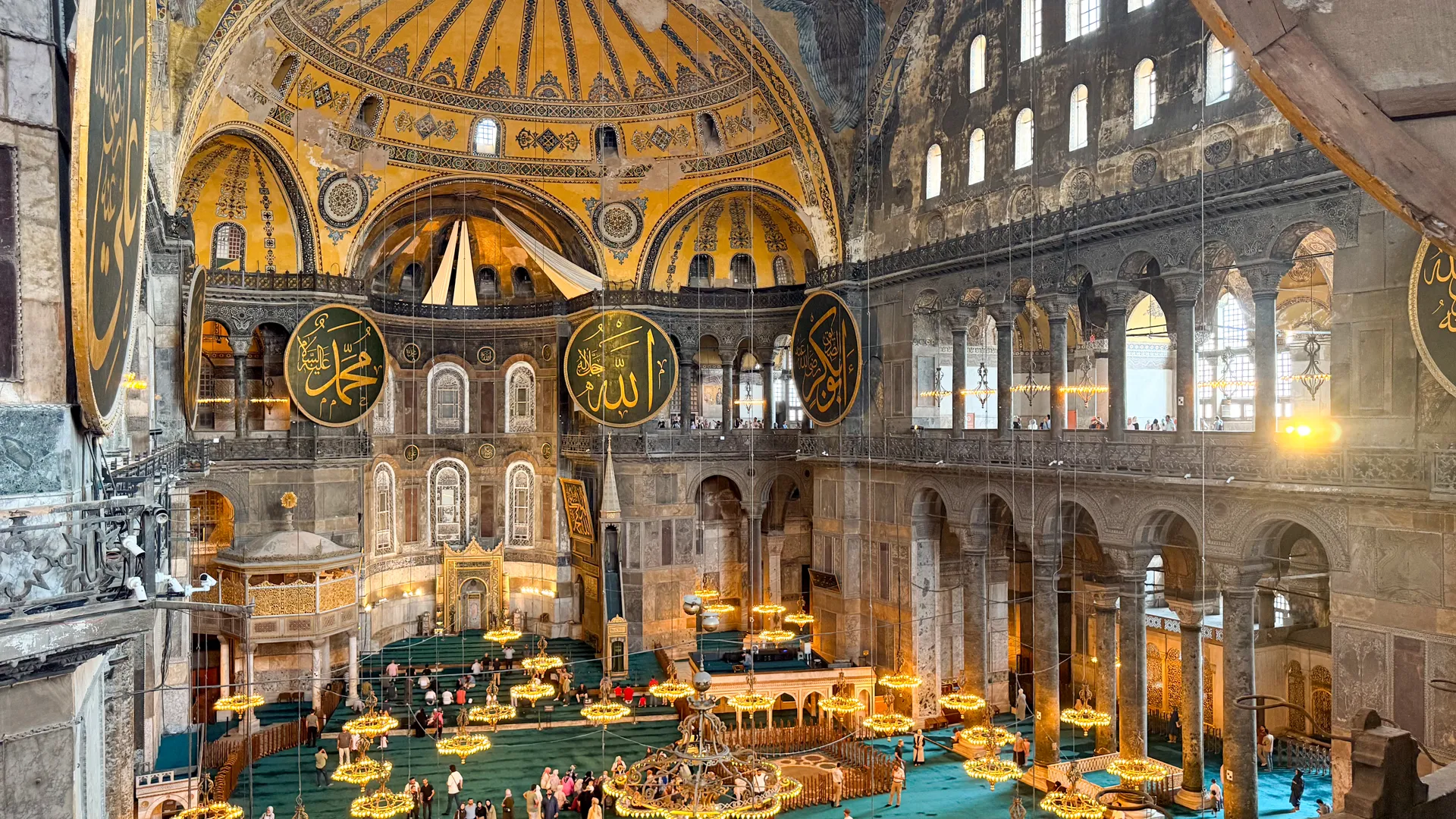
For nearly fifteen centuries, Hagia Sophia has stood at the center of Istanbul’s story. Commissioned by Emperor Justinian I and completed in 537 AD, it was built as the cathedral of Constantinople and remained the largest enclosed interior space in the world for almost a thousand years.
Its massive dome, rising 55.6 meters above the floor, transformed architectural history. Contemporary accounts describe visitors entering the building and believing the dome was suspended from heaven itself, supported not by stone but by light. Even today, the scale of the interior remains difficult to appreciate until standing beneath it.
Following the Ottoman conquest of Constantinople in 1453, Hagia Sophia was converted into an imperial mosque. Minarets were added, Christian mosaics were carefully covered rather than destroyed, and the building continued serving as one of the most important religious structures in the empire. In 1935 it became a museum before reopening as a mosque in 2020.
One of the most remarkable aspects of Hagia Sophia is that visitors can still see evidence of each period of its history. Byzantine mosaics, Ottoman calligraphy, marble revetments, imperial tombs, Islamic architectural additions, and centuries of restoration work exist within the same structure, creating a visual timeline of Istanbul itself.
Those who visit the upper gallery should look for the famous Empress Zoe Mosaic, where the empress remains unchanged while the face beside her was altered following different imperial marriages. Nearby, carved into the marble balustrade, a small Viking inscription believed to date from the Varangian Guards offers a rare reminder of the international world that once gathered in Constantinople.
More than a monument, Hagia Sophia reflects the transformation of the city from Byzantine Constantinople to Ottoman Istanbul and ultimately to the modern metropolis visitors encounter today.
Blue Mosque
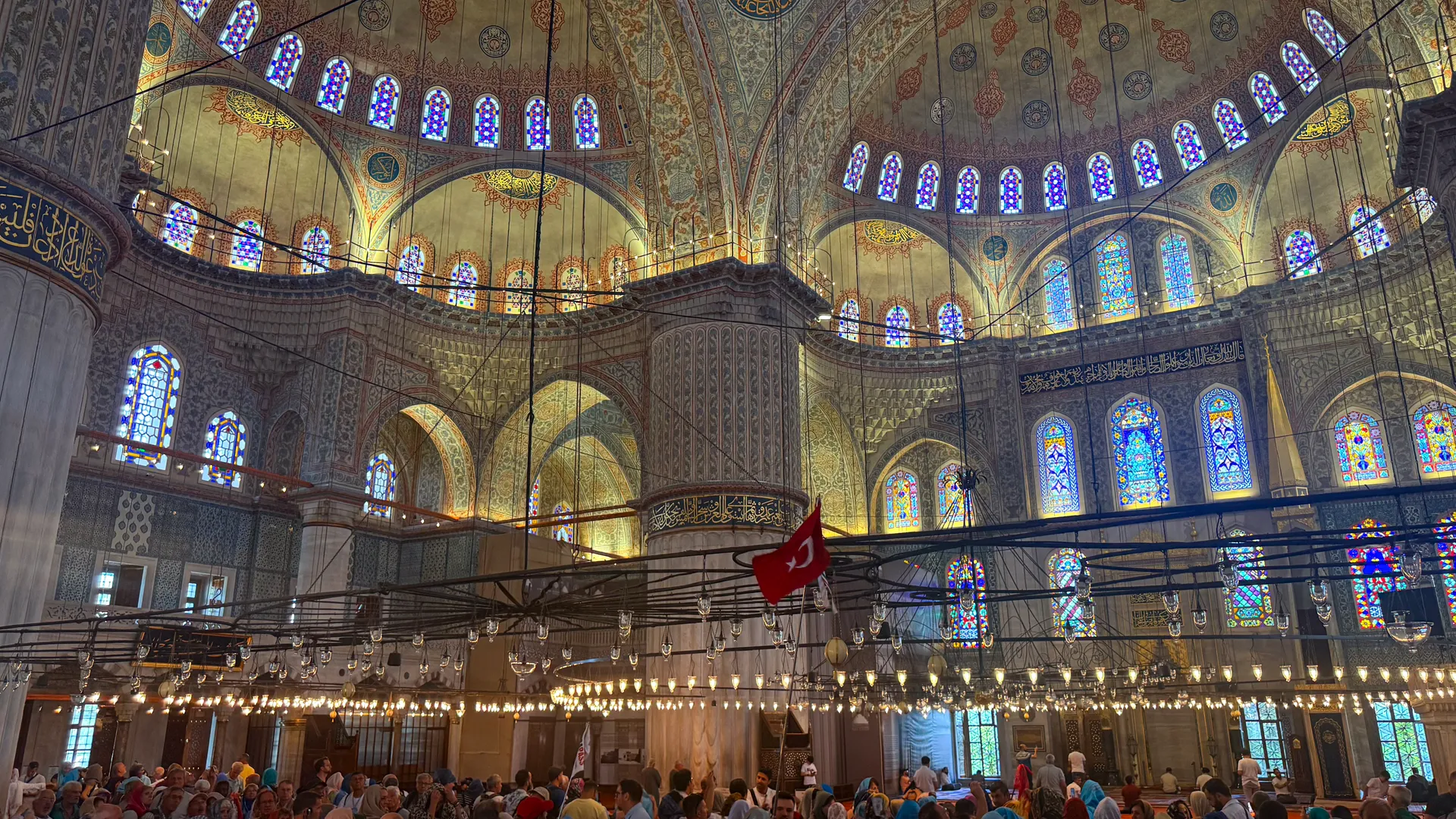
Officially known as the Sultan Ahmed Mosque, the Blue Mosque was commissioned by Sultan Ahmed I and completed in 1616 during the final great period of classical Ottoman architecture. Built directly opposite Hagia Sophia, the mosque was designed to demonstrate the strength, confidence, and artistic achievements of the Ottoman Empire at a time when Istanbul stood as one of the world’s leading imperial capitals.
The mosque is the masterpiece of Sedefkâr Mehmed Ağa, a student of the renowned imperial architect Mimar Sinan. Drawing inspiration from Hagia Sophia while remaining distinctly Ottoman in character, he created a structure defined by cascading domes, elegant proportions, and a vast central prayer hall flooded with natural light.
The name “Blue Mosque” comes from the more than 20,000 handmade İznik tiles that decorate the interior. Their floral designs, tulips, carnations, roses, and cypress motifs represent the peak of Ottoman ceramic craftsmanship. Although visitors often expect the interior to appear entirely blue, the effect is more subtle, changing throughout the day as sunlight filters through hundreds of stained-glass windows.
One of the mosque’s most distinctive features is its six minarets. According to a popular story, this unusual number initially caused controversy because the Grand Mosque in Mecca also had six minarets at the time. To resolve the issue, a seventh minaret was later added to the mosque in Mecca, preserving its unique status within the Islamic world.
Beyond its architectural beauty, the Blue Mosque remains a living place of worship. Daily prayers continue beneath the central dome just as they have for more than four centuries. Visitors who arrive outside prayer times can observe not only the intricate decoration but also the scale, acoustics, and spatial harmony that characterize the classical Ottoman architectural tradition.
Standing in Sultanahmet Square between the Blue Mosque and Hagia Sophia offers one of the clearest visual summaries of Istanbul’s history. Facing one another across the former Byzantine Hippodrome, these two monuments represent successive chapters of the city’s Byzantine and Ottoman past, each helping define the skyline of modern Istanbul.
Basilica Cistern
Hidden beneath the streets of Sultanahmet, the Basilica Cistern offers a glimpse into the engineering systems that sustained Constantinople for centuries. Constructed during the reign of Emperor Justinian I in the sixth century, the cistern was designed to store and distribute water to the Great Palace and surrounding districts, ensuring a reliable supply during periods of drought, siege, or population growth.
Water reached the reservoir through a network of aqueducts extending across the Thracian countryside. Among them was the Aqueduct of Valens, one of the most ambitious infrastructure projects of the late Roman world. Together, these systems supplied a city that at times ranked among the largest urban centers on Earth.
The cistern measures approximately 140 meters in length and 70 meters in width. Within this vast underground chamber stand 336 marble columns arranged in orderly rows, many of them reused from earlier Roman structures. Their reflections in the shallow water create one of the most recognizable interiors in Istanbul, while the vaulted brick ceiling demonstrates the sophistication of Byzantine engineering.
At the northwestern corner of the reservoir are two famous Medusa heads that serve as column bases. One is positioned sideways and the other upside down. Their original source remains uncertain, though most scholars believe they were taken from an earlier Roman monument and reused during construction. Whether placed this way for practical reasons or symbolic purposes remains one of the enduring mysteries of the site.
Beyond its architectural beauty, the Basilica Cistern reveals an aspect of Constantinople often overlooked by visitors. Empires depended not only on palaces, churches, and monuments, but also on the hidden infrastructure that allowed hundreds of thousands of people to live within the city walls. The cistern stands as one of the most remarkable surviving examples of that system.
Today, visitors walk along elevated platforms above the water, surrounded by columns that have stood for nearly fifteen centuries. The cool air, subdued lighting, and quiet atmosphere create a striking contrast to the busy streets of Sultanahmet just above, offering a different perspective on the history of Istanbul.

Topkapi Palace
For nearly four centuries, Topkapi Palace served as the political, administrative, and ceremonial center of the Ottoman Empire. Following the conquest of Constantinople in 1453, Sultan Mehmed II selected this commanding position overlooking the Bosphorus, the Golden Horn, and the Sea of Marmara to establish the seat of a new imperial capital.
Unlike many European royal residences built as a single monumental structure, Topkapi Palace developed gradually over generations. Successive sultans expanded the complex into a self-contained imperial city containing government offices, ceremonial halls, libraries, kitchens, gardens, mosques, schools, and residential quarters. At its peak, thousands of people lived and worked within the palace walls.
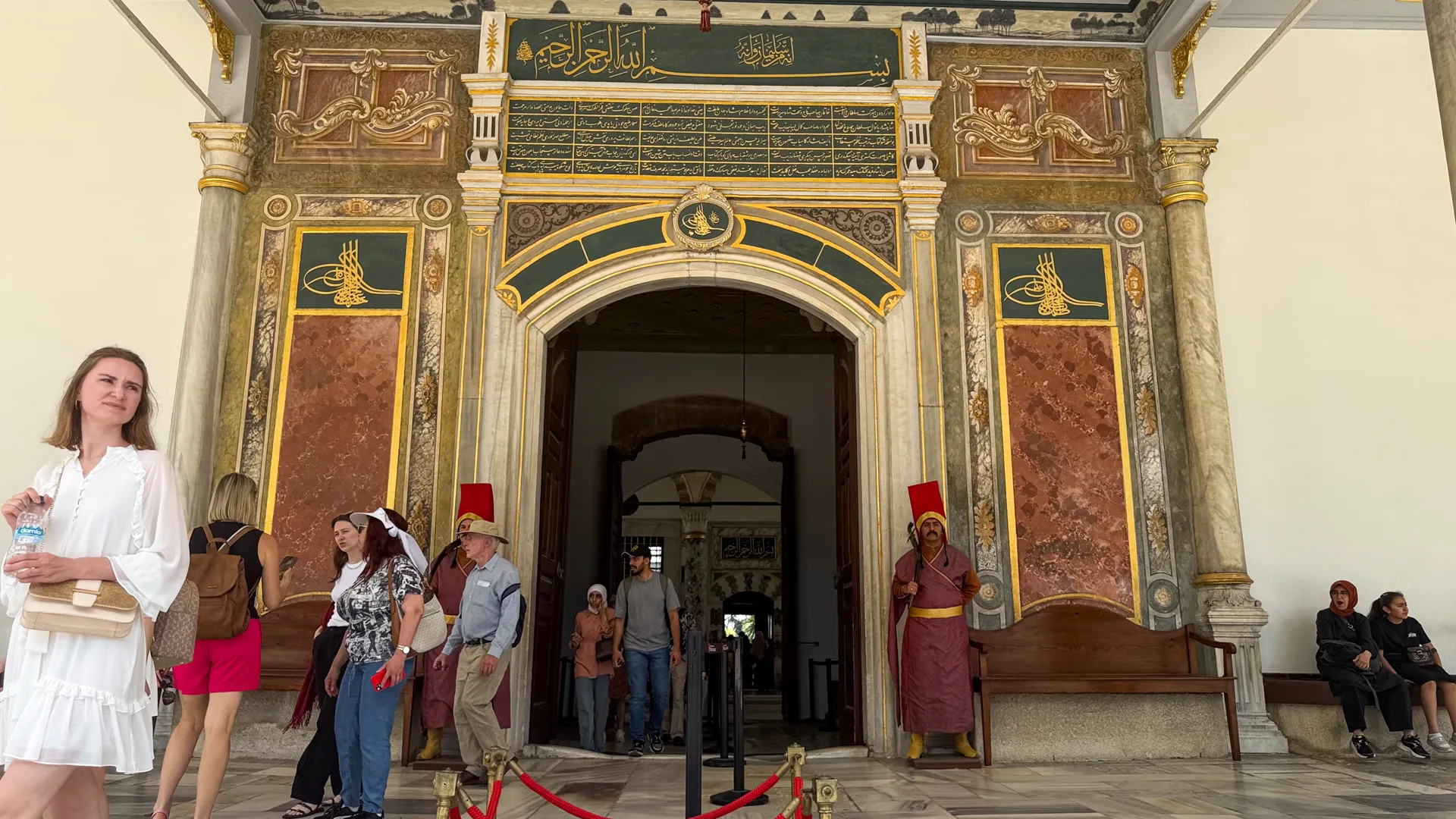
Visitors enter through a series of courtyards designed to reflect the hierarchy of the Ottoman state. Each gate marked a transition into a more restricted area. Foreign ambassadors, military commanders, provincial governors, and high-ranking officials were carefully received according to protocol, emphasizing the authority of the sultan and the organization of the empire.
One of the most important areas of the palace was the Imperial Council Chamber, where state affairs were discussed and decisions affecting territories across Europe, Asia, and Africa were made. Nearby stood the Treasury, which housed some of the empire’s most celebrated possessions, including the Spoonmaker’s Diamond and the Topkapi Dagger, both of which remain among the museum’s most visited exhibits today.
The Harem, often surrounded by myths and misconceptions, functioned as far more than a private residence. It was a highly structured institution where members of the imperial family lived and where royal education, dynastic succession, and political influence were carefully managed. Powerful figures such as Kösem Sultan and Hürrem Sultan played significant roles in shaping Ottoman history from within its walls.
The palace is also home to the Sacred Relics Collection, one of the most important religious collections in the Islamic world. Among the objects preserved here are relics associated with the Prophet Muhammad, his companions, and other revered figures of Islamic tradition, attracting visitors and pilgrims from across the globe.
Beyond its treasures and collections, Topkapi Palace offers a rare opportunity to understand how one of history’s longest-lasting empires governed itself. Walking through its courtyards and pavilions reveals not only the daily life of the Ottoman court but also the administrative system that connected distant provinces to the imperial capital for centuries..
Grand Bazaar
The Grand Bazaar is one of the oldest and largest covered markets in the world. Its origins date to the years following the Ottoman conquest of Constantinople, when Sultan Mehmed II commissioned the first bedestens to stimulate trade and establish Istanbul as the commercial center of the empire. Over the centuries, the market expanded into a vast network of streets, courtyards, workshops, and shops that became known as the Kapalıçarşı, or Covered Bazaar.
For much of its history, the Grand Bazaar served as the economic heart of the city. Merchants arriving from the Balkans, the Black Sea, Anatolia, Persia, North Africa, and the wider Mediterranean exchanged goods within its walls. Silk, spices, carpets, jewelry, ceramics, leather, precious metals, and luxury textiles passed through the market, connecting Istanbul to trade networks that stretched across three continents.
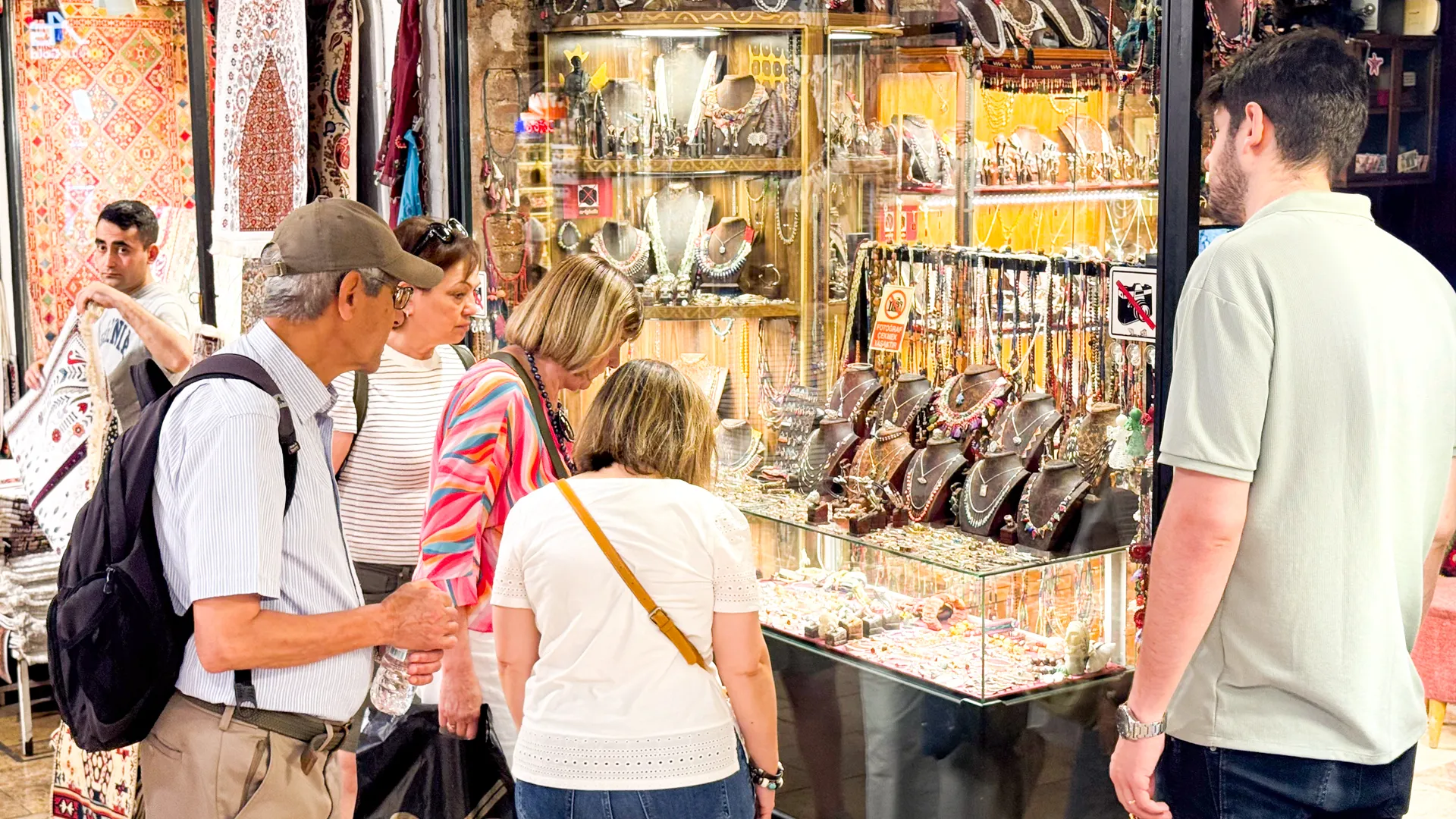
Unlike many historic markets that survive primarily as tourist attractions, the Grand Bazaar continues to function as a working commercial district. Today, more than 4,000 shops operate beneath its vaulted ceilings, while traditional craftsmen work alongside modern businesses. Goldsmiths, carpet dealers, calligraphers, antique merchants, leather artisans, and textile traders continue occupations that have been practiced here for generations.
One of the most fascinating aspects of the bazaar is its organization. During the Ottoman period, different guilds occupied specific sections of the market, grouping similar trades together and creating a system that regulated quality, pricing, and professional standards. Traces of this arrangement can still be seen in the names and layout of many streets within the complex.
Walking through the Grand Bazaar is as much about observing daily life as it is about shopping. Conversations between merchants, the sound of craftsmen at work, the aroma of Turkish coffee drifting through side passages, and the constant movement of people create an atmosphere that reflects centuries of commercial tradition. Understanding local payment customs can also make shopping in historic markets easier for first-time visitors.
Beyond its role as a marketplace, the Grand Bazaar offers insight into how Istanbul grew into one of the world’s great trading cities. For generations, commerce, craftsmanship, and cultural exchange have converged beneath its domes, making it one of the most enduring symbols of the city’s economic and social history.
Egyptian Bazaar (Spice Bazaar)
Located near Eminönü and the Golden Horn, the Egyptian Bazaar has served as one of Istanbul’s most important trading centers since the seventeenth century. Built as part of the New Mosque complex, revenues from the market helped support the charitable institutions associated with the külliye.
Historically, merchants sold spices arriving from Egypt, Arabia, and Asia, giving the market its popular name. Today, visitors find a colorful mix of spices, teas, Turkish delight, dried fruits, nuts, and traditional products that continue to reflect Istanbul’s role as a crossroads of trade and culture.
Smaller and easier to navigate than the Grand Bazaar, the Egyptian Bazaar offers a lively introduction to the aromas, flavors, and commercial traditions that have shaped daily life in Istanbul for centuries.
Süleymaniye Mosque
Completed in 1557, the Süleymaniye Mosque represents the height of Ottoman political power, artistic achievement, and architectural innovation. Commissioned by Sultan Süleyman the Magnificent and designed by Mimar Sinan, the mosque was conceived not merely as a place of worship but as a statement of imperial confidence during the sixteenth century.
Rising above the Golden Horn on one of Istanbul’s historic hills, the complex dominates the skyline while maintaining a remarkable sense of balance and proportion. Sinan regarded the project as one of the defining works of his career, refining ideas that would later culminate in his masterpiece, the Selimiye Mosque in Edirne.
The mosque forms the center of a larger külliye, or charitable complex, that once included schools, hospitals, kitchens, baths, shops, and accommodation for travelers. This reflected the Ottoman understanding of a mosque as both a religious and social institution serving the wider community.
Inside, the vast prayer hall demonstrates Sinan’s mastery of light and space. Rather than overwhelming visitors with ornament, the architect focused on harmony, geometry, and carefully controlled proportions. Large windows illuminate the interior throughout the day, while the central dome creates an atmosphere of openness and serenity.
The mosque also contains the tombs of Sultan Süleyman and Hürrem Sultan, known in Europe as Roxelana. Their mausoleums remain important historical monuments and attract visitors interested in the lives of the Ottoman dynasty.
Beyond its architecture, the Süleymaniye Mosque provides one of the best vantage points in Istanbul. The terraces overlooking the Golden Horn offer sweeping views across the Historic Peninsula, helping visitors understand the geography and scale of the city that once served as the capital of a global empire.
Gülhane Park and the Istanbul Archaeological Museum
Once forming part of the outer gardens of Topkapi Palace, Gülhane Park offers a quieter perspective on Istanbul’s Historic Peninsula. For centuries, these grounds were reserved for members of the Ottoman court before gradually opening to the public during the nineteenth century. Today, shaded pathways, mature trees, historic fountains, and panoramic viewpoints provide a welcome escape from the busy streets surrounding Sultanahmet.
Yet Gülhane is more than a city park. It occupies an important place in Ottoman history as the location where the Imperial Edict of Gülhane was proclaimed in 1839. Often considered the beginning of the Tanzimat reforms, the decree introduced a new period of legal, administrative, and social transformation that reshaped the Ottoman Empire during the nineteenth century.
Adjacent to the park stands the Istanbul Archaeological Museum, one of Türkiye’s most significant cultural institutions and among the earliest archaeological museums established in the region. Founded under the direction of Osman Hamdi Bey, the museum played a pioneering role in the development of archaeology and heritage preservation within the late Ottoman Empire.
Its collections span thousands of years and bring together artifacts from Anatolia, Mesopotamia, the Levant, Egypt, and the wider Mediterranean world. Among its most celebrated exhibits is the Alexander Sarcophagus, discovered in Sidon and renowned for its remarkably preserved battle scenes. The museum also houses a copy of the Treaty of Kadesh, signed between the Egyptians and Hittites in the thirteenth century BC and often cited as the earliest known international peace treaty.
For visitors seeking a broader understanding of the civilizations that shaped Istanbul and Anatolia, the museum provides valuable context beyond the Byzantine and Ottoman monuments of the Old City. Together, Gülhane Park and the Istanbul Archaeological Museum reveal how the Historic Peninsula preserves not only imperial architecture but also layers of history stretching back thousands of years.
Chora Church
Located near the ancient land walls of Constantinople, the Chora Church, known today as Kariye Mosque, preserves some of the finest examples of late Byzantine art anywhere in the world. Although far smaller than Hagia Sophia, many art historians consider its mosaics and frescoes among the greatest artistic achievements of the Byzantine Empire.
The church traces its origins to the early Byzantine period, though much of what visitors see today dates to the fourteenth century. During this final flourishing of Byzantine culture, the statesman and scholar Theodore Metochites sponsored an ambitious renovation program that transformed the church into a masterpiece of religious art. His portrait presenting a model of the church to Christ can still be seen inside, serving as a rare depiction of a Byzantine patron.
The mosaics narrate the lives of the Virgin Mary and Jesus Christ with remarkable detail and emotional expression. Unlike the more formal styles of earlier centuries, the figures display movement, individuality, and human emotion, reflecting the artistic revival known as the Palaiologan Renaissance. These scenes were designed not merely as decoration but as visual theology, communicating religious teachings to worshippers through images.
Among the most celebrated works is the fresco of the Anastasis in the funerary chapel. The composition depicts Christ descending into the realm of the dead and raising Adam and Eve from their tombs. Widely regarded as one of the masterpieces of Byzantine painting, it captures both dramatic movement and profound spiritual symbolism.
Following the Ottoman conquest, the church was converted into a mosque, preserving much of its structure while gradually covering many of the Christian images beneath plaster. Subsequent restoration projects revealed many of these artworks, allowing modern visitors to appreciate the remarkable survival of Byzantine artistic traditions.
For travelers interested in the Byzantine history of Istanbul, Chora Church offers an experience that differs significantly from Hagia Sophia. While Hagia Sophia impresses through scale and engineering, Chora captivates through narrative, craftsmanship, and artistic detail, providing a closer look at the intellectual and spiritual world of late Byzantium.quieter viewing experience.

Galata Tower
Rising above the northern shore of the Golden Horn, Galata Tower has watched over Istanbul for nearly seven centuries. The present structure was built by the Genoese in 1348 as part of the defensive walls surrounding the colony of Galata, then an important commercial settlement linked to Mediterranean trade networks. Known originally as the Tower of Christ, it stood as a symbol of Genoese influence at a time when Constantinople remained the capital of the Byzantine Empire across the water.
Its strategic position provided clear views of the Bosphorus, the Golden Horn, and the Sea of Marmara, allowing merchants and guards to monitor ships entering the city’s harbors. Following the Ottoman conquest of Constantinople in 1453, the tower remained an important landmark and was later adapted for a variety of purposes, including observation, defense, and fire detection.
Throughout the Ottoman period, fires represented one of the greatest threats to Istanbul’s predominantly wooden neighborhoods. Watchmen stationed atop the tower scanned the horizon for smoke, making Galata Tower an essential part of the city’s early warning system. From this vantage point, authorities could quickly identify fires spreading across the hills of Istanbul and organize a response.
The tower is also associated with one of the most famous legends in Turkish history. According to the seventeenth-century traveler Evliya Çelebi, Hezarfen Ahmet Çelebi launched himself from the top of Galata Tower using handmade wings and successfully crossed the Bosphorus, landing in Üsküdar on the Asian side of the city. While historians continue to debate the account, the story remains one of Istanbul’s most enduring symbols of curiosity, innovation, and ambition.
Today, the observation deck offers one of the finest panoramic views in Istanbul. Visitors can trace the course of the Bosphorus, identify the domes and minarets of the Historic Peninsula, follow the shoreline of the Golden Horn, and appreciate how the city’s geography shaped its development across both Europe and Asia.
More than a viewpoint, Galata Tower reflects the many civilizations that influenced Istanbul. Byzantine Constantinople, the Genoese trading colonies, the Ottoman Empire, and the modern republic have all left their mark on the skyline that surrounds it, making the tower one of the city’s most recognizable landmarks.

Fener and Balat
Although located beyond the main visitor route of Sultanahmet, Fener and Balat offer a different perspective on Istanbul’s history. These neighboring districts developed along the shores of the Golden Horn and became home to Greek Orthodox, Jewish, Armenian, and Muslim communities whose presence shaped the area for centuries.
Fener is best known as the historic center of the Greek Orthodox community in Istanbul and the home of the Ecumenical Patriarchate of Constantinople, one of the most important institutions in Eastern Orthodox Christianity. Nearby streets preserve churches, schools, and residential buildings that reflect the district’s long connection to the city’s Byzantine and post-Byzantine heritage.
Balat developed as a multicultural neighborhood where Jewish, Armenian, and Muslim communities lived side by side. Walking through its steep streets reveals layers of everyday urban history expressed through timber houses, neighborhood bakeries, workshops, synagogues, and local markets that continue to serve residents today.
In recent years, Fener and Balat have become some of Istanbul’s most visited neighborhoods among international travelers, photographers, and independent explorers. Restored Ottoman houses, colorful facades, small cafés, antique shops, and creative studios have transformed parts of the district into one of the city’s most recognizable cultural quarters while preserving much of its historic character.
Unlike the monumental architecture of Sultanahmet, Fener and Balat provide insight into how ordinary people lived within the wider fabric of Istanbul. The neighborhoods reveal a more intimate side of the city, where history survives not only in famous landmarks but also in streets, homes, local traditions and community life that continue to reflect Turkish hospitality today.
Is Istanbul Old City Worth Visiting?
Yes. The Istanbul Old City contains some of the world’s most important Byzantine and Ottoman landmarks, including Hagia Sophia, the Blue Mosque, Topkapi Palace, and the Grand Bazaar. Few places offer such a concentration of history, architecture, and cultural heritage within a walkable area.
Can You See Istanbul Old City in One Day?
Yes. Most of the major landmarks are located within walking distance of one another, making it possible to see the highlights in a single day. However, visitors interested in museums, lesser-known monuments, and local neighborhoods may find that two days allows for a more rewarding experience.
Practical Tips for Visiting
The best times to explore Istanbul Old City are generally between April and June and again from September to October, when temperatures are comfortable for walking between landmarks. Visitors planning to enter active mosques such as Hagia Sophia, the Blue Mosque, or Süleymaniye Mosque should dress modestly and be aware that access may be restricted during prayer times, particularly on Fridays. Comfortable footwear is recommended, as much of the district is best explored on foot. Along the way, local favorites such as simit, Turkish coffee, and traditional street food offer an easy introduction to Istanbul’s culinary culture. Travelers interested in local cuisine can also explore our guide to Turkish food before visiting Istanbul.
Opening Hours of Major Landmarks
Please note that opening hours may change seasonally or during religious holidays.
Hagia Sophia: 08:00–19:00
Blue Mosque: 08:30–18:30 (Fridays from 14:30)
Topkapi Palace: 08:30–17:30 (Closed Tuesdays)
Basilica Cistern: 09:00–22:00
Grand Bazaar: 08:30–19:00 (Closed Sundays)
Egyptian Bazaar: 08:00–19:00
Why Explore Istanbul Old City with Adventus?
Many visitors can identify Hagia Sophia, the Blue Mosque, or Topkapi Palace on a map, but understanding how these places connect requires historical context. Our private Istanbul tours are designed to go beyond the major landmarks, connecting Byzantine, Ottoman, and modern Istanbul through stories, architecture, daily life, and local perspectives.
Rather than following a fixed group schedule, each experience is tailored to your interests and pace. Whether your focus is archaeology, religious history, architecture, photography, food, or local culture, our guides help transform a visit from sightseeing into a deeper understanding of one of the world’s most influential cities.
Discovering the Istanbul Old City at Your Own Pace
Do not rush the Istanbul Old City. Let it unfold gradually.
Sit in a courtyard, notice the architectural details above a doorway, or remain beneath a dome longer than planned. Meaning often emerges in unhurried moments.
The monuments of the Historic Peninsula reveal far more than architecture alone. Together, they tell the story of how Roman, Byzantine, and Ottoman civilizations shaped one of the world’s most influential cities.
That is the philosophy behind how we guide.
Plan your private Istanbul sightseeing tour to experience the Istanbul Old City with Adventus Travel.
WRITTEN BY

Nisa Buket Dağdelen
Operations Director & Tour Guide
LinkedIn Profile

Hüseyin Pekgöz
Founder & Managing Partner
LinkedIn Profile
Adventus Travel Company


