

Ephesus is often introduced through its famous Roman ruins, yet the region tells a much larger story. Beyond the Ancient City lies a cultural landscape where ancient trade routes, sacred pilgrimage sites, medieval monuments and traditional Aegean villages reveal thousands of years of human history.
From the Library of Celsus and the Temple of Artemis to the House of the Virgin Mary, Ayasuluk Hill, Selçuk and Şirince Village, each place represents a different chapter in the evolution of one of the ancient Mediterranean’s most influential centres. Understanding how these places connect transforms a visit from simply exploring impressive ruins into discovering the wider story of Ephesus.
This Ephesus Travel Guide explores the region as a connected whole. It explains where Ephesus is located, how geography shaped its development, what to see beyond the Ancient City, where to stay and how to plan anything from a single day to a longer cultural trip.
Ephesus is also one chapter within the much broader archaeological and cultural landscape of Anatolia. For travellers planning beyond the Aegean region, our Turkey Travel Guide connects Ephesus with the country’s major destinations, historical regions and practical travel routes.
Why Visit Ephesus?
Many archaeological sites preserve individual monuments. Ephesus preserves something much larger: the structure of an ancient urban world.
Within the Ancient City, streets, public buildings, religious monuments, commercial spaces, residential districts and civic infrastructure remain connected through an unusually legible urban plan. Walking through Ephesus makes it possible to understand how different parts of a major Roman city related to one another rather than encountering ruins as isolated monuments.
But the Ancient City is only part of the experience.
Within a relatively compact region, visitors can explore the sanctuary where the Temple of Artemis once attracted pilgrims from across the ancient Mediterranean, visit the House of the Virgin Mary, follow the later history of Ephesus onto Ayasuluk Hill, see original archaeological finds in Selçuk and experience the traditional Aegean setting of Şirince.
This diversity makes Ephesus relevant far beyond Roman archaeology. Ancient religion, early Christianity, Byzantine heritage, medieval Anatolian architecture, local food and village life all belong to the same regional story.
What truly distinguishes Ephesus is therefore not one monument but the relationship between them.
The Ancient City reveals the Roman metropolis. The Temple of Artemis reaches into an earlier religious landscape. The House of the Virgin Mary and Basilica of St. John explain the region’s importance within Christian tradition, while Ayasuluk Hill shows how settlement and political power shifted after the decline of the Roman city.
Seen together, Ephesus becomes a historical landscape rather than a collection of attractions.
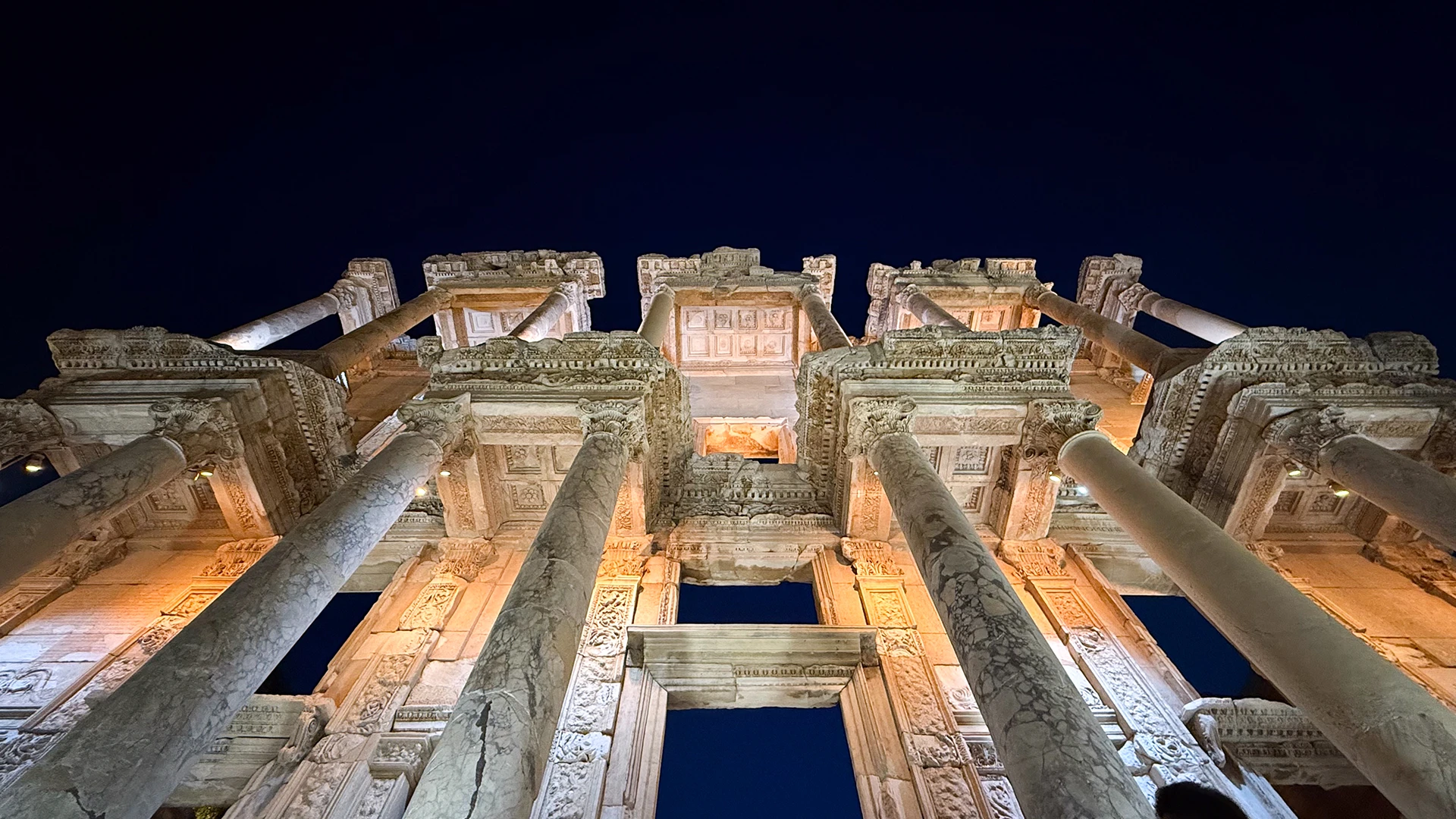
Where Is Ephesus in Turkey?
Ephesus is located near the modern town of Selçuk in İzmir Province in western Turkey, approximately 80 kilometres south of İzmir and 20 kilometres northeast of Kuşadası.
Selçuk provides the closest base for the archaeological sites, while Kuşadası connects Ephesus with the Aegean coast and serves as the principal arrival point for cruise passengers visiting the region.
Although the Ancient City now lies several kilometres inland, its original relationship with the sea was very different.
The Ephesus region occupied a strategic position between the Küçük Menderes, ancient Cayster, Valley and maritime routes across the Aegean and Mediterranean. Goods, people and ideas could move between inland Anatolia and the wider ancient world, helping Ephesus develop into an important commercial, political and religious centre.
Today, the same location makes Ephesus relatively easy to incorporate into a wider western Turkey itinerary, particularly alongside İzmir, Pamukkale and other destinations across the Aegean region.

Why Is Ephesus No Longer on the Coast?
One of the most useful facts for understanding Ephesus is also one of the easiest to overlook.
The city was once a major port.
In antiquity, the Cayster River connected the surrounding valley with the Aegean, while the harbour provided Ephesus with access to maritime trade across the Mediterranean. Merchant ships brought goods into Asia Minor, while agricultural products and other materials from inland Anatolia could move through the same port towards international markets.
Over centuries, however, the river carried sediment from the surrounding landscape towards the coast.
These deposits gradually accumulated around the harbour and made the waterway increasingly shallow. As sediment continued to build, the coastline moved westward and maintaining navigable access to the sea became progressively more difficult.
This was not a single catastrophic event. The process unfolded over centuries.
Understanding it helps explain several otherwise disconnected parts of Ephesus: why the city became so wealthy, why maintaining the harbour was so important, why settlement patterns changed and why the archaeological site today appears unexpectedly far from the modern coastline.
How Geography Made Ephesus Powerful
Ephesus prospered because it connected two worlds.
To the east lay the productive landscapes and road networks of inland Anatolia. To the west lay maritime routes leading across the Aegean and wider Mediterranean.
Agricultural products, marble, timber, textiles and other regional goods could move towards the harbour, while imported materials and ideas entered Asia Minor through the same network.
During the Roman period, this geographical advantage helped Ephesus become the capital of the Province of Asia and one of the eastern Mediterranean’s most important urban centres.
The harbour was connected with the city by the Arcadiane, a monumental avenue leading towards the Great Theatre and the urban centre beyond.
Trade therefore shaped more than the economy. It influenced architecture, population, religion and political importance, helping create the cosmopolitan city whose remains survive today.
Continue Exploring Ephesus & Turkey
Before continuing your trip, you may also find these destination guides and suggested private itineraries helpful.

Plan Your Trip
Explore Ephesus in More Detail
Suggested Private Tours
- Private Turkey Tours
- Ephesus & Pamukkale 3 Day Tour
- Best of Turkey Tour
- Istanbul, Ephesus & Pamukkale Tour
Why Did Ephesus Move?
The Ephesus visitors explore today was not the region’s first urban centre.
Earlier settlement developed closer to the ancient shoreline and the sanctuary of Artemis, where access to fertile land, freshwater and maritime routes supported the growth of the community.
As environmental conditions changed and political circumstances evolved, the location of the city changed with them.
The most significant transformation came during the late fourth century BCE under Lysimachus, one of the successors of Alexander the Great. He relocated the city between Mount Pion and Mount Coressus and established much of the urban framework that later developed into Roman Ephesus.
The new location offered stronger defensive advantages and allowed the settlement to be organised around a planned street system, public spaces and infrastructure capable of supporting a much larger population.
Many of the monuments visible today belong to the Roman period, but the basic organisation of the city reflects this earlier Hellenistic transformation.
How Many Times Did Ephesus Change?
Ephesus was not built once and then abandoned.
Its history is better understood as a series of shifts in settlement, political importance and religious focus across the same wider landscape.
Early communities developed around the ancient shoreline and the sanctuary of Artemis. Hellenistic Ephesus moved to the planned city established under Lysimachus. Roman Ephesus expanded dramatically within that framework and became one of the most important metropolitan centres of Asia Minor.
As the harbour became increasingly difficult to maintain and the political world of the eastern Mediterranean changed, the focus of settlement gradually shifted again.
During the Byzantine and medieval periods, Ayasuluk Hill became increasingly important. The Basilica of St. John, fortifications and later the Isa Bey Mosque reflect a regional centre that continued to evolve long after the marble streets of Roman Ephesus had lost their former role.
These were not unrelated cities appearing one after another. They were different expressions of a regional centre repeatedly adapting to geography, political authority, trade and religion.
A Short History of the Ephesus Region
Understanding the broad historical sequence makes the individual monuments much easier to place.
Ephesus was never defined by a single civilisation. The landscape passed through prehistoric settlement, Anatolian and Greek cultural interaction, Hellenistic urban planning, Roman metropolitan prosperity, early Christianity, Byzantine transformation and later Turkish rule.
Each period changed the region without completely erasing what came before.

Before Classical Ephesus
Human activity in the wider Ephesus region began long before the monuments associated with the Greek and Roman city.
Archaeological evidence indicates settlement reaching back into prehistory, supported by the fertile valley, freshwater resources and proximity to the ancient coastline.
By the Bronze Age, western Anatolia was already connected with wider networks across the Aegean and eastern Mediterranean.
These early communities did not leave the monumental urban landscape visitors associate with Ephesus today, but they established a much longer history of settlement in a region whose geography would continue to attract people for thousands of years.
Ephesus and the Greek World
During the first millennium BCE, local Anatolian traditions and Greek cultural influences increasingly shaped the identity of Ephesus.
Ancient foundation traditions associate the city with Ionian migration, while the sanctuary of Artemis developed into one of the most important religious centres of the ancient Mediterranean.
The Temple of Artemis eventually became famous as one of the Seven Wonders of the Ancient World.
Its importance extended beyond worship. Pilgrims, merchants, craftsmen and political representatives moved through the sanctuary, while festivals and economic activity helped strengthen Ephesus as a regional centre.
The sanctuary therefore belonged to both the religious and commercial history of the city.
The Hellenistic Transformation
The period following Alexander the Great changed Ephesus fundamentally.
Under Lysimachus, the urban centre was relocated and reorganised between the surrounding mountains. A planned street network, defensive walls and public spaces created the framework for a new city.
This Hellenistic plan matters because Roman Ephesus did not emerge from nothing.
The Romans inherited an already organised urban landscape and expanded it dramatically, adding the monumental architecture that now dominates the archaeological site.
Understanding this sequence makes the surviving city easier to read: Hellenistic planning created the framework, while Roman prosperity transformed its scale and appearance.

Roman Ephesus: The City’s Golden Age
Ephesus reached its greatest prosperity under Roman rule.
As the capital of the Roman Province of Asia, it became one of the eastern Mediterranean’s most important centres of administration, commerce and civic life.
The harbour connected the city with maritime trade, while roads extended inland across Asia Minor. Wealth generated through these networks supported monumental construction and an increasingly sophisticated urban environment.
The Library of Celsus, Great Theatre, Curetes Street, Commercial Agora, public baths, fountains and Terrace Houses belong to this world.
Rather than exploring each monument in detail here, our Ephesus Ancient City guide follows the archaeological site itself, including its major monuments, walking route and practical visitor information.
For the wider regional story, what matters is that Roman prosperity transformed Ephesus into a cosmopolitan city whose influence extended far beyond western Anatolia.
Ephesus and Early Christianity
Ephesus later became one of the most important centres associated with the development of early Christianity.
Christian tradition connects the region with Saint Paul, Saint John the Apostle and the Virgin Mary, while Ephesus is also one of the Seven Churches addressed in the Book of Revelation.
These associations transformed the religious importance of the region.
The House of the Virgin Mary in Ephesus, located on Mount Koressos above the ancient city, became one of its most significant Christian pilgrimage destinations. The Basilica of St. John on Ayasuluk Hill represents another major layer of the region’s Christian heritage.
The rise of Christianity did not create an entirely separate historical landscape. Churches, pilgrimage traditions and new religious centres developed within and around places that had already carried sacred meaning for centuries.

From Byzantine Ephesus to Ayasuluk
The decline of Roman Ephesus did not mean the region was suddenly abandoned.
The silting harbour reduced the city’s commercial advantages, while changing political and economic networks altered the role of the old urban centre.
Settlement and religious activity increasingly concentrated around Ayasuluk Hill.
During the Byzantine period, the Basilica of St. John became one of the region’s defining monuments. Defensive structures strengthened the hill, and the surrounding settlement continued to evolve under later political powers.
Following Turkish rule, new architectural traditions appeared alongside the surviving Byzantine landscape. The Isa Bey Mosque, completed in the fourteenth century, became one of the clearest expressions of this later phase.
The centre of Ephesus had shifted again, but the region remained inhabited and culturally important.
Why This History Matters When You Visit
Without this broader chronology, Ephesus can easily appear to be a Roman city surrounded by unrelated attractions.
It was not.
The Temple of Artemis belongs to an earlier sacred landscape. The streets of the Ancient City reveal Hellenistic planning transformed by Roman prosperity. The House of the Virgin Mary and Basilica of St. John represent the region’s Christian importance, while Ayasuluk Hill and the Isa Bey Mosque show how settlement continued to evolve after antiquity.
Seeing these places as parts of the same story changes the purpose of visiting them.
Instead of collecting individual landmarks, you begin following how one region repeatedly adapted to changing coastlines, religions, political powers and trade networks.
That continuity is what makes the wider Ephesus landscape as important as the Ancient City itself.
Explore the Ephesus Region
Exploring Ephesus means discovering far more than a single archaeological site.
Within a relatively compact area, Roman streets, ancient sanctuaries, Christian pilgrimage sites, Byzantine monuments, medieval Anatolian architecture, archaeological collections and a traditional Aegean village reveal different chapters of the same regional story.
The Ephesus Ancient City represents the region at the height of its Roman prosperity. The House of the Virgin Mary in Ephesus reflects its continuing importance within Christian tradition. The Temple of Artemis reaches further back into the sacred landscape of ancient Ephesus, while Ayasuluk Hill shows how settlement and religious life shifted after the decline of the Roman city.
Selçuk ties many of these places together today, while Şirince introduces a very different side of the region through village architecture, agriculture, local food and living Aegean culture.
Understanding these relationships makes it easier to decide what deserves time rather than treating every attraction as an independent sightseeing stop.
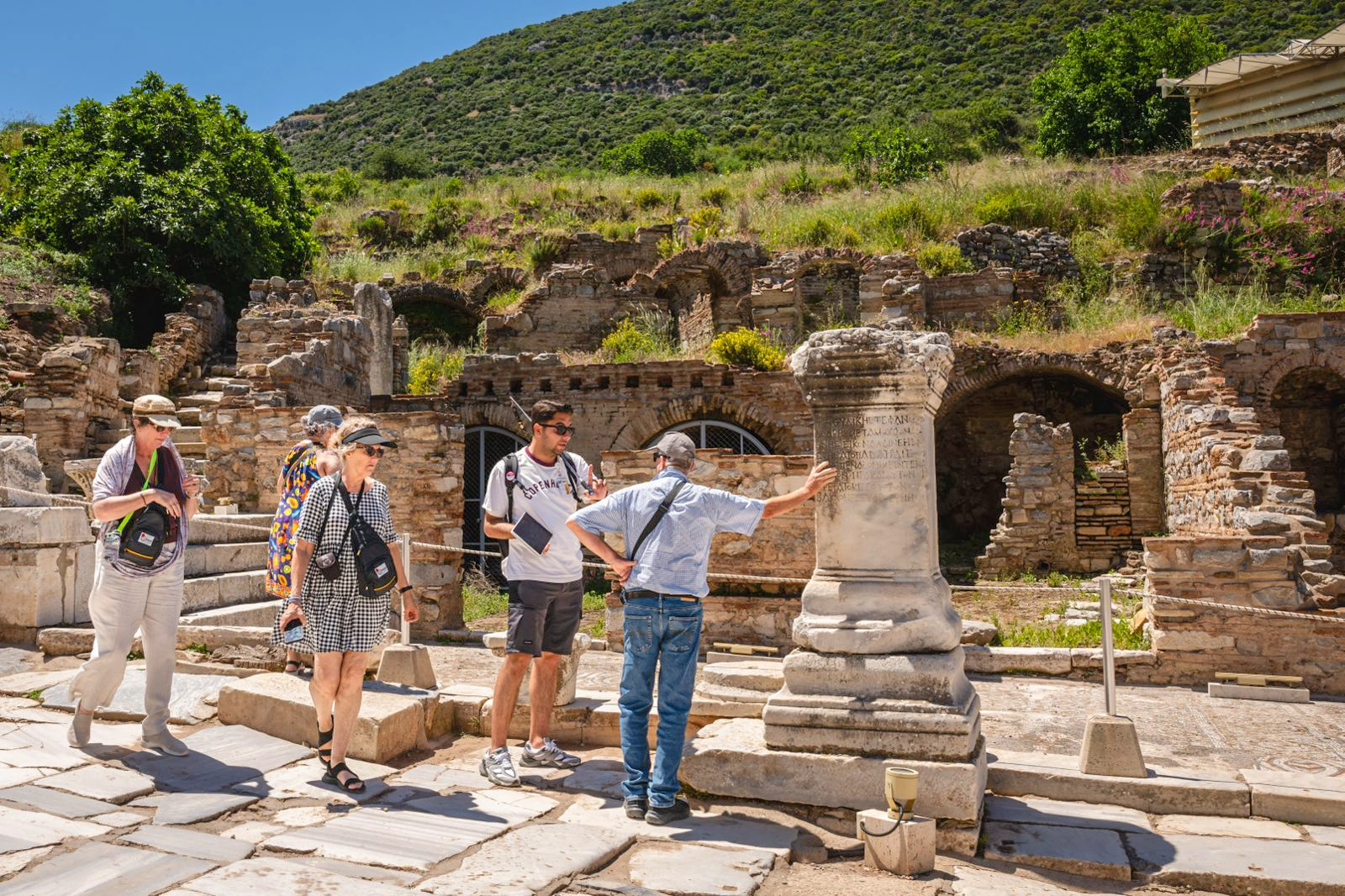
Ephesus Ancient City
The Ephesus Ancient City is the archaeological heart of the region and the place most visitors come to see first.
Its marble streets preserve the structure of a major Roman metropolis, with civic buildings, commercial spaces, religious monuments, entertainment venues and wealthy residences forming part of the same urban landscape.
The Library of Celsus, Great Theatre, Curetes Street, Temple of Hadrian, Commercial Agora and Terrace Houses are among its best-known monuments, but the value of Ephesus lies in how these places relate to one another.
Allow at least two to three hours for a first visit, and considerably longer if archaeology is a major interest.
For a detailed walking route, monument-by-monument explanation, Terrace Houses information and practical planning, continue with our Ephesus Ancient City guide.
House of the Virgin Mary
High on the forested slopes of Mount Koressos, the House of the Virgin Mary in Ephesus provides a very different experience from the Ancient City below.
According to Christian tradition, the Virgin Mary spent her final years in this area under the care of Saint John. The site later developed into an important place of pilgrimage and continues to welcome both religious visitors and cultural travellers.
The sanctuary centres on a small stone building surrounded by woodland. The atmosphere is quiet and reflective, with a sacred spring and wishing wall forming part of the modern pilgrimage experience.
Whether approached through faith, history or cultural interest, the site helps explain why the Ephesus region remained important within Christian tradition long after the religious world of Artemis and Roman Ephesus had changed.
For its history, religious significance, papal visits and practical visitor information, see our complete House of the Virgin Mary in Ephesus guide.

Temple of Artemis
Very little remains above ground of the Temple of Artemis today, yet its historical importance is difficult to overstate.
The sanctuary was one of the great religious centres of the ancient Mediterranean, and the monumental temple eventually became celebrated as one of the Seven Wonders of the Ancient World.
Pilgrims, merchants, craftsmen and political representatives travelled to the sanctuary, making Artemis central not only to the religious identity of Ephesus but also to its economy and international reputation.
The Artemis worshipped here also developed a distinctive local identity. The famous statues preserved in the Ephesus Archaeological Museum demonstrate how Ephesian religious traditions combined Anatolian elements with the wider Greek world.
Visitors expecting extensive standing ruins may initially find the archaeological site modest. Much of the temple disappeared through destruction, reuse and centuries of change.
Its importance therefore depends on understanding what once stood here rather than the amount of architecture that survives today.
Because the Temple of Artemis is close to Selçuk and requires relatively little time to visit, it fits naturally alongside Ayasuluk Hill and the Archaeological Museum.

Ayasuluk Hill: The Story After Roman Ephesus
Ayasuluk Hill is one of the most useful places for understanding that the history of Ephesus continued after the decline of the Roman city.
As the ancient harbour became increasingly difficult to maintain and settlement patterns changed, the focus of regional life gradually shifted towards the hill above modern Selçuk.
Several important monuments survive within and around this later centre.
Basilica of St. John
The Basilica of St. John was constructed during the reign of Emperor Justinian I in the sixth century.
According to Christian tradition, the basilica was built over the burial place of Saint John the Apostle. Its monumental scale reflects the importance of Ephesus as a Christian pilgrimage centre during the Byzantine period.
Although much of the building survives as ruins, its plan and reconstructed elements provide a sense of what was once one of the region’s major religious monuments.
The elevated position also provides views across the wider Ephesus landscape, helping connect the Roman city, Temple of Artemis and later settlement around Ayasuluk.
Ayasuluk Castle
Above the basilica, Ayasuluk Castle occupies the summit of the hill.
Its fortifications were modified through different periods, reflecting the strategic importance of the location as political control of the region changed.
From the hill, the geography of Ephesus becomes considerably easier to understand. The ancient city, surrounding plain and modern Selçuk can be seen as parts of the same landscape rather than separate destinations.
Isa Bey Mosque
At the foot of Ayasuluk Hill stands the Isa Bey Mosque, completed in 1375 during the Aydinid period.
The mosque represents another major shift in the cultural history of the region, introducing medieval Anatolian Turkish architecture into a landscape already shaped by Greek, Roman and Byzantine monuments.
Stone and architectural material from earlier structures were reused in its construction, creating a visible connection between different periods of Ephesus even within the fabric of the building itself.
Together, the Basilica of St. John, Ayasuluk Castle and Isa Bey Mosque make Ayasuluk Hill one of the strongest places for understanding the continuity of settlement after antiquity.
Ephesus Archaeological Museum
The Ephesus Archaeological Museum in Selçuk provides something the Ancient City cannot: the opportunity to see many of the objects that once occupied its streets, houses, sanctuaries and public buildings.
The collection includes sculptures, inscriptions, mosaics, frescoes, coins, jewellery, ceramics and everyday objects recovered during archaeological excavation across the region.
Among its most important exhibits are statues of Artemis of Ephesus.
Seeing them after visiting the Temple of Artemis helps transform an archaeological site with relatively few standing remains into something much easier to understand. The statues reveal the distinctive iconography of the goddess worshipped here and provide context for the sanctuary’s importance.
The museum also brings the Roman city closer to everyday life.
Objects from houses, streets and public spaces reveal how people decorated their homes, worshipped, traded and participated in civic life. Many details that disappear within the scale of the Ancient City become much easier to appreciate when viewed individually.
For travellers with a strong interest in archaeology, the museum should not be treated as an optional rainy-day attraction. Visiting it before or after the Ancient City creates a much more complete picture of Ephesus.
Şirince Village
Around eight kilometres from Selçuk, Şirince provides a completely different end to a day dominated by archaeology.
The hillside village developed as a Greek Orthodox settlement during the Ottoman period and retains a distinctive architectural character through its narrow streets, traditional houses and surrounding agricultural landscape.
Following the population exchange between Greece and Turkey in 1923, new communities settled in the village, adding another chapter to its history.
Today, Şirince is known for small restaurants, cafés, local products, olive oil, handicrafts and fruit wines. Its popularity means it can become busy, particularly during weekends and holiday periods, but the village still provides a useful contrast to the monumental historical sites around Selçuk.
Rather than adding another archaeological monument to the itinerary, Şirince introduces living Aegean culture.
This is what makes it work particularly well after Ephesus. A day can move from Roman streets and archaeological collections towards food, village architecture and an evening in the hills without travelling far from Selçuk.
Which Ephesus Attractions Should You Prioritise?
If you have limited time, prioritise according to the type of visit you want rather than trying to see every site.
For a first visit focused on archaeology, begin with the Ephesus Ancient City and add the Archaeological Museum if time allows.
For travellers interested in Christian heritage, combine the Ancient City with the House of the Virgin Mary in Ephesus and Basilica of St. John.
For a broader historical perspective, include the Temple of Artemis and Ayasuluk Hill.
If you have a full day and want to finish at a slower pace, Şirince works naturally later in the afternoon or evening.
With two days, there is little reason to rush. The archaeological sites can be explored properly on the first day, leaving Selçuk, Ayasuluk Hill, the museum and Şirince for a more relaxed second day.
Where to Stay Near Ephesus
For most travellers, the choice comes down to Selçuk or Kuşadası.
Both provide easy access to Ephesus, but they offer very different experiences. Selçuk places you within the historical landscape itself, while Kuşadası combines Ephesus with beaches, resort hotels and the Aegean coast.
The right choice depends less on driving distance and more on how Ephesus fits into the rest of your trip.
Selçuk: Best for History and Archaeology
For travellers whose priority is Ephesus, Selçuk is generally the most practical and rewarding place to stay.
The town lies only a few minutes from the Ancient City and sits at the centre of the region’s archaeological landscape. Staying here makes an early start straightforward, which is particularly valuable during summer when temperatures and visitor numbers rise later in the day.
Selçuk is also much more than a gateway to the ruins.
The Ephesus Archaeological Museum is located in town, while Ayasuluk Hill, the Basilica of St. John, Isa Bey Mosque and Temple of Artemis are all nearby. Şirince can also be reached within a short drive.
This concentration of sites allows travellers to experience Ephesus as a region rather than repeatedly travelling back and forth from a coastal hotel.
The atmosphere is relatively relaxed, with small hotels, guesthouses, local restaurants, cafés and shops rather than large resort complexes.
Choose Selçuk if archaeology, history, photography and cultural exploration are the main reasons for your visit.
Kuşadası: Best for the Coast and Resort Hotels
Around 20 kilometres west of Ephesus, Kuşadası offers a very different base.
The town is one of the major cruise ports on Turkey’s Aegean coast, which is why many international visitors first encounter Ephesus through a shore excursion from Kuşadası.
It also has a much larger accommodation market than Selçuk, ranging from city hotels to beachfront resorts.
Waterfront promenades, restaurants, beaches, marina facilities and nightlife make Kuşadası better suited to travellers who want Ephesus to form one part of a wider coastal holiday.
The drive to the Ancient City generally takes around 25 to 30 minutes, making a day trip straightforward.
Kuşadası also provides convenient access to other coastal destinations, including Dilek Peninsula National Park, so it works particularly well when archaeology needs to be balanced with time by the Aegean Sea.
Selçuk or Kuşadası: Which Is Better?
Choose Selçuk if:
- Ephesus is one of the main reasons for your trip.
- You want to reach the Ancient City early.
- Archaeology and cultural heritage are priorities.
- You prefer boutique hotels or smaller guesthouses.
- You want Ayasuluk Hill, the museum and Temple of Artemis close by.
- Şirince is also part of your plans.
Choose Kuşadası if:
- You want a beachfront or resort-style hotel.
- Swimming and coastal time are important.
- You prefer a larger selection of hotels and nightlife.
- Ephesus is one part of a longer Aegean holiday.
- You are arriving by cruise ship.
Neither requires sacrificing access to Ephesus. The two towns are close enough that the decision should primarily reflect how you want to spend the hours outside the archaeological sites.
Can You Stay in Şirince?
Yes. Şirince offers a third option for travellers who prefer a quieter village setting.
Accommodation is smaller in scale and generally centred around restored houses, boutique properties and guesthouses rather than conventional hotels.
Staying overnight also changes the experience of the village. Most day visitors leave towards the end of the afternoon, allowing the streets to become noticeably quieter in the evening and early morning.
Şirince is less convenient than Selçuk if your priority is reaching several archaeological sites quickly, but it can work particularly well for couples, slower itineraries or travellers who value atmosphere over logistical efficiency.
How Many Nights Should You Stay?
One night is enough if Ephesus is primarily a stop between other destinations and you want one full day for the main archaeological sites.
Two nights provide a much better balance for most cultural travellers. This creates time for the Ancient City, House of the Virgin Mary, museum and Ayasuluk Hill without fitting everything into a single day.
A third night becomes worthwhile if Şirince, the coast or a slower exploration of Selçuk is also important.
Travellers continuing towards Pamukkale can then leave after breakfast rather than combining several hours of sightseeing with an onward drive on the same day.
The same principle works in reverse for travellers arriving from Istanbul or elsewhere in Turkey: allowing enough time around Ephesus usually creates a better experience than treating the region as a brief archaeological stop.
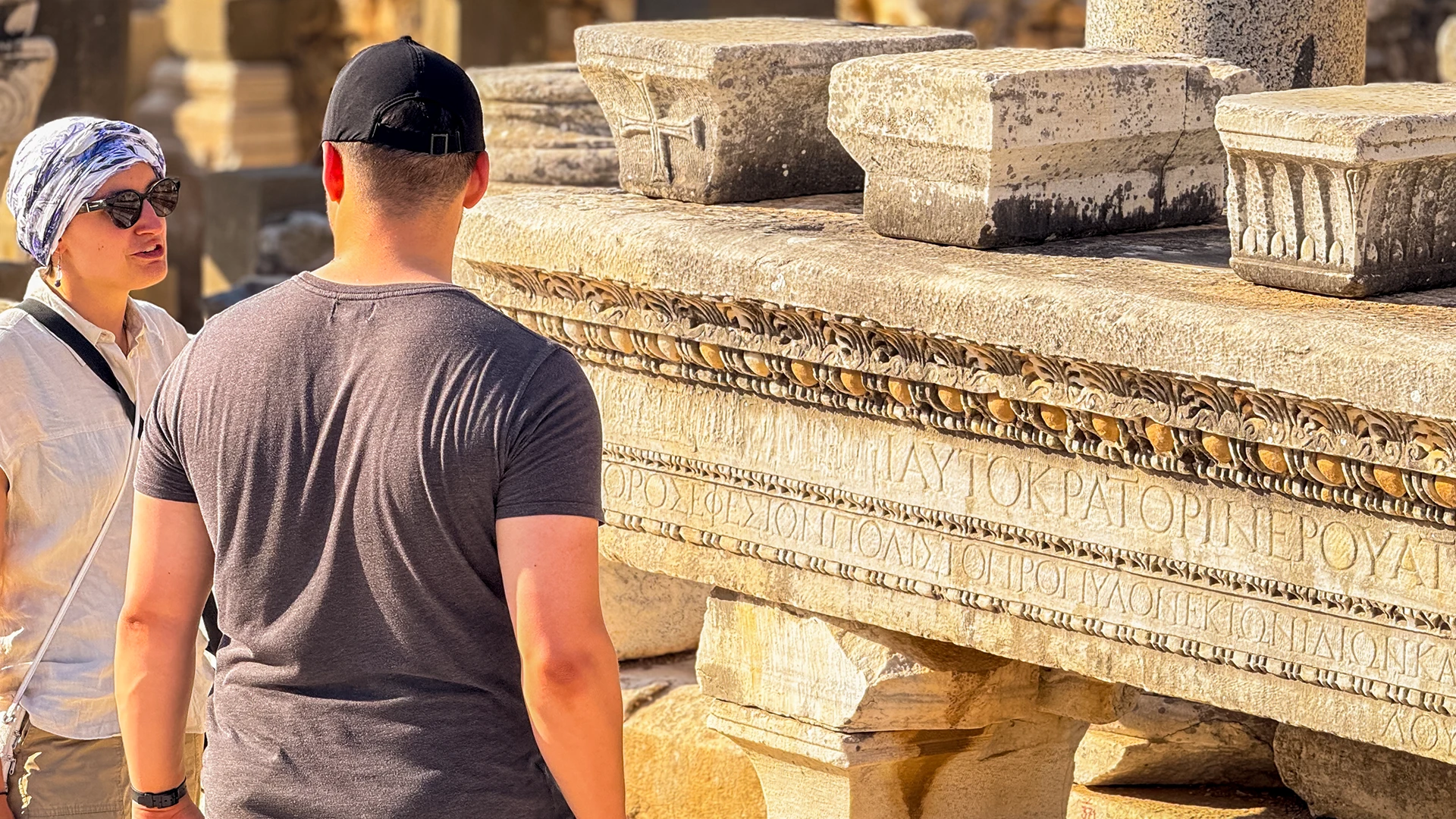
Ephesus Travel Guide: Planning Your Visit
Planning a visit to Ephesus is relatively straightforward, but a few decisions can significantly improve the experience.
The Ancient City is extensive, largely outdoors and only one part of the wider Ephesus region. How much time you allow, when you arrive and which surrounding sites you include will determine whether the day feels balanced or rushed.
For many first-time visitors, one full day provides a good introduction. Two days allow the wider region to be explored at a much more comfortable pace.
How Many Days Do You Need in Ephesus?
A half day works if the Ancient City is your main priority. Allow at least two to three hours for the archaeological site itself, particularly if you plan to visit the Terrace Houses.
A full day allows you to combine the Ancient City with the House of the Virgin Mary and selected sites around Selçuk, such as the Temple of Artemis or Ephesus Archaeological Museum.
With two days, the itinerary becomes considerably more flexible. Ayasuluk Hill, the museum, Şirince and the smaller historical sites around Selçuk can be explored without compressing everything into a single sightseeing day.
For most cultural travellers, one full day is the minimum I would recommend, while two days provide the better overall experience.
Best Time to Visit Ephesus
Ephesus can be visited throughout the year, but spring and autumn provide the most comfortable conditions for exploring the region.
April to June combines generally pleasant temperatures with longer daylight hours. Spring is particularly well suited to the Ancient City because much of the archaeological site is exposed.
September to November provides another strong period. The intense summer heat begins to ease while conditions remain suitable for long days outdoors.
July and August are considerably hotter. Temperatures can exceed 35°C, and the marble surfaces of the Ancient City provide relatively little relief from direct sun. If visiting during summer, arrive as early as possible.
Winter brings cooler temperatures and fewer visitors. Rain is possible, but travellers who prioritise archaeology over warm weather may appreciate the quieter atmosphere.
What Is the Best Time of Day to Visit Ephesus Ancient City?
Early morning is generally the best choice, particularly between late spring and early autumn.
Arriving shortly after opening provides three advantages: cooler temperatures, softer light and fewer large groups inside the archaeological site.
The experience changes noticeably once the main tour and cruise traffic arrives.
Late afternoon can also work, especially outside peak summer, but opening hours and the time needed to explore the site should be checked before planning a late entry.
During July and August, avoid building the day around a midday visit if your schedule allows another option.
How Do You Get Around the Ephesus Region?
The main attractions are relatively close to one another, but they are not all comfortably connected on foot.
Selçuk, the Archaeological Museum, Temple of Artemis and Ayasuluk Hill are concentrated within a manageable area.
The Ancient City lies outside the town centre, while the House of the Virgin Mary is higher on Mount Koressos and is much easier to reach by vehicle.
Taxis can work well for individual transfers. A rental car provides greater independence for travellers continuing through western Turkey, while a private vehicle is particularly useful when several sites need to be combined efficiently within one day.
Visitors arriving by cruise ship generally travel from Kuşadası, while İzmir Adnan Menderes Airport is the main airport serving the wider region.
What Should You Wear at Ephesus?
Comfortable walking shoes are the priority.
The Ancient City involves several kilometres of walking across marble streets, stone surfaces and gentle slopes. Smooth ancient paving can also become slippery when wet.
During warmer months, lightweight clothing, sunscreen, sunglasses, a hat and drinking water are useful. Shade is limited across significant parts of the archaeological site.
Spring and autumn mornings can feel considerably cooler than the middle of the day, so light layers provide more flexibility.
If the House of the Virgin Mary is also part of your itinerary, choose clothing appropriate for an active religious site. Covering shoulders and knees is a respectful approach.
Which Entrance Should You Use at Ephesus Ancient City?
Ephesus has upper and lower entrances, and the direction of the visit can affect how comfortable the walk feels.
When transport arrangements allow, beginning at the Upper Gate and finishing at the Lower Gate creates a predominantly downhill route through the archaeological site.
This works particularly well with private transportation because the vehicle can meet you at the opposite entrance rather than requiring you to return to where you started.
Independent visitors using one parking area should consider the return logistics before choosing an entrance.
For a detailed route through the archaeological site itself, including the major monuments and Terrace Houses, use our Ephesus Ancient City guide.
Don’t Skip the Terrace Houses
The Terrace Houses are one of the most valuable additions to a visit to Ephesus.
Built into the slope above Curetes Street, these residences belonged to some of the city’s wealthiest inhabitants. Mosaics, frescoes, marble surfaces and sophisticated domestic architecture reveal a side of Roman Ephesus that monumental public buildings cannot.
They also make the social differences within the city much easier to understand. The Great Theatre and Library of Celsus represent civic Ephesus; the Terrace Houses bring visitors into private domestic space.
They require additional time and separate admission arrangements, so include them when calculating how long to spend inside the Ancient City.
How to Visit Ephesus in One Day
A well-planned day can cover the principal highlights without turning the region into a checklist.
Morning: Ephesus Ancient City
Begin at Ephesus Ancient City shortly after opening.
Allow approximately two to three hours for the main archaeological site, including the Terrace Houses if they are part of your visit.
Starting from the Upper Gate allows the route to progress gradually downhill through the city towards the Library of Celsus, Commercial Agora and Great Theatre.
Late Morning: House of the Virgin Mary
Continue by vehicle to the House of the Virgin Mary in Ephesus on Mount Koressos.
The experience is considerably smaller and quieter than the Ancient City, so it provides a natural change of pace after several hours among the Roman ruins.
Lunch: Selçuk
Return towards Selçuk for lunch.
This creates a useful pause before continuing with the smaller archaeological and cultural sites during the afternoon.
Afternoon: Museum, Temple of Artemis and Ayasuluk Hill
Visit the Ephesus Archaeological Museum to see objects recovered from the Ancient City and surrounding sites.
The nearby Temple of Artemis requires relatively little time but provides important context for the earlier religious history of Ephesus.
If time and energy allow, continue to Ayasuluk Hill for the Basilica of St. John, castle and views across the wider region.
Late Afternoon or Evening: Şirince
Şirince works well as the final stop when the day is not already too full.
The transition from archaeological sites to village streets, local food and the surrounding hills creates a very different end to the day.
If archaeology is the priority, however, do not shorten the Ancient City or museum simply to fit Şirince into the itinerary. Save it for a second day instead.
Should You Visit Ephesus Independently or with a Guide?
Ephesus can be visited independently. The archaeological site is established, the principal monuments are identifiable and travellers who enjoy researching history can explore at their own pace.
A licensed guide changes the experience in a different way.
The value is not simply being told dates or monument names. Ephesus becomes easier to understand when the relationship between the harbour, streets, public buildings, Terrace Houses, Artemis cult and later Christian landscape is explained while moving through the region.
A guide is particularly useful for travellers with limited time because the Ancient City, House of the Virgin Mary and surrounding sites can be placed within the same historical narrative rather than experienced as separate attractions.
For travellers who prefer privately guided travel, our Private Turkey Tours provide the broader framework for tailor-made itineraries across Turkey.
Ephesus can also be combined naturally with Pamukkale on our Ephesus & Pamukkale 3 Day Tour, while travellers beginning in Istanbul can connect the three destinations through our Istanbul, Ephesus & Pamukkale Tour.
For a wider route across several regions, the Best of Turkey Tour places Ephesus within a longer journey through the country’s major cultural landscapes.
Frequently Asked Questions About Ephesus
Where is Ephesus located?
Ephesus is located near Selçuk in İzmir Province on Turkey’s Aegean coast, approximately 80 kilometres south of İzmir and 20 kilometres from Kuşadası.
Selçuk is the closest town and the most convenient base for travellers primarily interested in the archaeological and historical sites.
Why is Ephesus famous?
Ephesus is famous for preserving one of the most complete ancient urban landscapes in the Mediterranean.
The Library of Celsus, Great Theatre, Curetes Street, Terrace Houses and other monuments reveal the scale and organisation of a major Roman city, while the wider region includes the Temple of Artemis, early Christian sites and later Byzantine and medieval monuments.
Is Ephesus a UNESCO World Heritage Site?
Yes. Ephesus was inscribed on the UNESCO World Heritage List in 2015.
The World Heritage property includes several components representing different stages in the region’s history, including the Ancient City, Ayasuluk Hill and the House of the Virgin Mary.
Why is Ephesus no longer on the coast?
Ephesus was once connected to the Aegean through a navigable harbour.
Over centuries, sediment carried by the Cayster River gradually accumulated around the harbour. The coastline moved westward and maintaining access to the sea became increasingly difficult, contributing to major changes in the city’s economy and settlement pattern.
How much time do you need at Ephesus?
Allow at least two to three hours for Ephesus Ancient City itself.
One full day is better if you also want to visit the House of the Virgin Mary, Archaeological Museum, Temple of Artemis or Ayasuluk Hill. Two days provide enough time to explore the wider region at a more relaxed pace and include Şirince.
What should you not miss at Ephesus Ancient City?
The Library of Celsus, Great Theatre, Curetes Street and Terrace Houses are among the principal highlights.
The Terrace Houses are particularly valuable for understanding private life among wealthy residents because their mosaics, frescoes and domestic architecture reveal a very different side of Roman Ephesus from the monumental public buildings.
Is the House of the Virgin Mary inside Ephesus Ancient City?
No. The House of the Virgin Mary is located on Mount Koressos, several kilometres from the archaeological site.
A vehicle is the most practical way to combine the two within the same itinerary.
Can you visit Ephesus in one day?
Yes. One full day is enough for a strong introduction to the Ephesus region.
Begin with the Ancient City in the morning, continue to the House of the Virgin Mary and use the afternoon for selected sites around Selçuk, such as the Archaeological Museum, Temple of Artemis or Ayasuluk Hill.
Trying to include every attraction plus Şirince can make the day unnecessarily rushed.
What is the best time to visit Ephesus?
Spring and autumn generally provide the most comfortable conditions.
April to June and September to November are particularly suitable for exploring the open-air archaeological site. During July and August, visiting shortly after opening helps avoid the strongest heat and busiest part of the day.
Is Selçuk or Kuşadası better for visiting Ephesus?
Selçuk is generally better for travellers focused on archaeology, history and cultural exploration because it is closer to the principal sites.
Kuşadası is better suited to travellers who want resort hotels, beaches, nightlife or a coastal holiday alongside their visit to Ephesus.
Can you visit Ephesus without a guide?
Yes. Ephesus can be explored independently.
A licensed guide becomes particularly useful for understanding how the monuments relate to the harbour, Roman urban planning, the Artemis cult and the later Christian history of the wider region rather than viewing each site in isolation.
Is Ephesus suitable for families with children?
Yes, but the Ancient City involves considerable walking over marble streets and uneven archaeological surfaces.
Comfortable footwear, water, sun protection and regular breaks are particularly important for families visiting during warmer months.
Can Ephesus and Pamukkale be combined?
Yes. Ephesus and Pamukkale work particularly well within the same western Turkey itinerary.
Rather than attempting both major archaeological destinations in a single rushed day, allowing several days provides time for Ephesus, Pamukkale and the surrounding cultural sites to be explored properly.
Is Ephesus worth visiting?
Yes. Ephesus is much more than the Library of Celsus or a collection of Roman ruins.
The Ancient City, Temple of Artemis, Christian pilgrimage sites, Ayasuluk Hill, Archaeological Museum and surrounding settlements together preserve different chapters in the history of one of western Anatolia’s most important cultural landscapes.
WRITTEN BY

Nisa Buket Dağdelen
Operations Director & Tour Guide
LinkedIn Profile

Hüseyin Pekgöz
Founder & Managing Partner
LinkedIn Profile
Adventus Travel Compan


