

Planning a trip to Istanbul requires more than choosing dates and booking accommodation. Where to stay, how many days to spend, and how to move between districts all shape how efficiently the city can be experienced.
Istanbul’s geography rarely behaves as simply as it appears on a map. Water, elevation, traffic, and historic street patterns can turn short distances into time-consuming transfers. This guide focuses on building a clearer structure around those realities. For a broader overview of the city’s history, neighborhoods, major sights, and travel planning, explore our Istanbul Travel Guide.

Continue Exploring Istanbul
Plan Your Stay
- Istanbul Travel Guide
- Istanbul Public Transportation Guide
- Istanbul Airport Tips
- Arriving at Istanbul Airport
- Taxis in Istanbul & the BiTaksi App
Explore Historic Istanbul
- Istanbul Old City Guide
- Hagia Sophia
- Topkapı Palace
- Grand Bazaar
- Basilica Cistern
- Hippodrome of Constantinople
Explore Istanbul with Adventus
- Istanbul Sightseeing Tour
- Istanbul to Cappadocia Tour
- Best of Turkey Tour
- Private Bosphorus Yacht Cruise
How Many Days in Istanbul Are Enough?
Planning a trip to Istanbul often begins with a simple question: how many days are enough? Duration matters, but structure matters more. A well-organized short stay can work better than a longer itinerary fragmented by unnecessary movement.
2 Days in Istanbul
Two days provide a strong introduction rather than a complete picture of the city.
The Historic Peninsula should usually take priority, with major landmarks such as Hagia Sophia, the Blue Mosque, Topkapı Palace, Basilica Cistern, and the Hippodrome grouped within the same geographical area.
A second day can then shift toward the Bosphorus, Karaköy, Galata, or the Grand Bazaar depending on individual interests.
For travelers continuing to Cappadocia or other regions of Turkey, two well-structured days in Istanbul can be entirely sufficient.

4 Days in Istanbul
Four days allow the city to become easier to understand.
The Historic Peninsula can be explored without compressing several major monuments into one day, while additional time can be given to Karaköy, Galata, Beyoğlu, the Bosphorus, and neighborhoods such as Fener and Balat.
This duration also creates more flexibility. Instead of treating Istanbul as a sequence of attractions, the itinerary can begin to include food, neighborhoods, walking, and time between major sites.
5 Days or More
Beyond five days, the greatest value comes from specialization rather than adding more attractions.
Travelers can spend more time with Byzantine history, Ottoman architecture, food, photography, neighborhoods, or the Bosphorus without feeling pressure to cover the entire city.
Longer stays work best when additional days are shaped around specific interests. Istanbul is vast, but attention is finite.
For most first-time visitors, the question is therefore not simply how many days to spend in Istanbul, but how intelligently those days are organized.
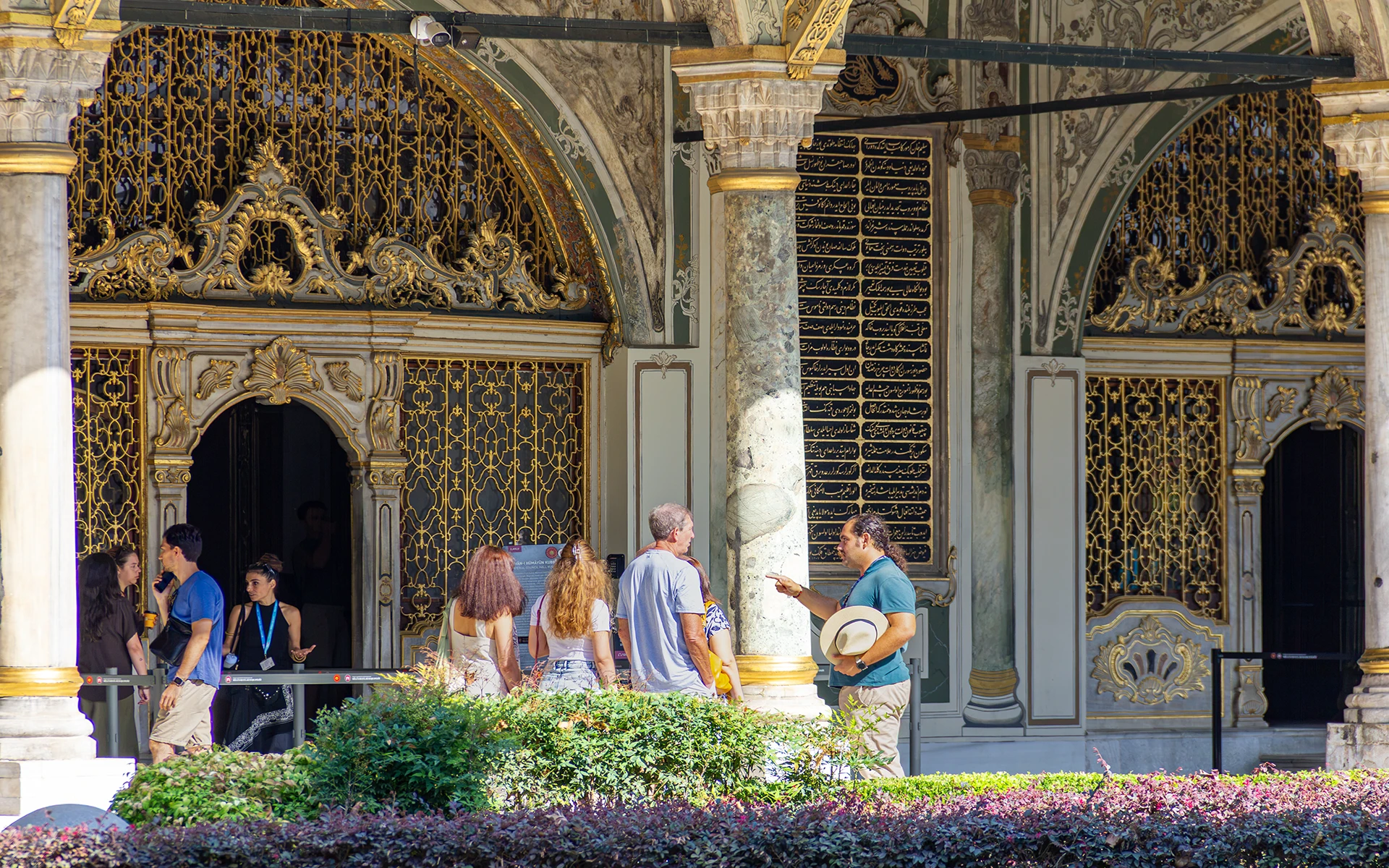
Where to Stay in Istanbul: Position Determines Experience
Planning a trip to Istanbul requires an early decision about where to stay because accommodation directly affects movement, energy, and the structure of each day.
A hotel that looks convenient on price alone may create longer transfers, more taxi use, and unnecessary fatigue. In Istanbul, location should be chosen according to how you expect to move through the city.
The Historic Peninsula
For first-time visitors focused on Istanbul’s major monuments, the Historic Peninsula offers the clearest advantage.
Hagia Sophia, the Blue Mosque, Topkapı Palace, Basilica Cistern, and the Hippodrome are all concentrated within walking distance. This makes early starts easier and reduces transport needs during monument-heavy days.
The trade-off comes in the evening. Sultanahmet becomes noticeably quieter once daytime sightseeing slows, which suits travelers who prefer a calm base but may feel limiting for those looking for stronger evening activity.
For a more detailed look at this area, see our Istanbul Old City Guide.

Karaköy and Galata
Karaköy and Galata offer one of the strongest balances between sightseeing, transport access, dining, and evening atmosphere.
Karaköy provides immediate access to ferries, the tram, and the waterfront, while Galata adds historic streets, cafés, restaurants, and a more elevated urban character.
The area works particularly well for travelers who want to reach the Historic Peninsula easily during the day but return to a livelier district in the evening.

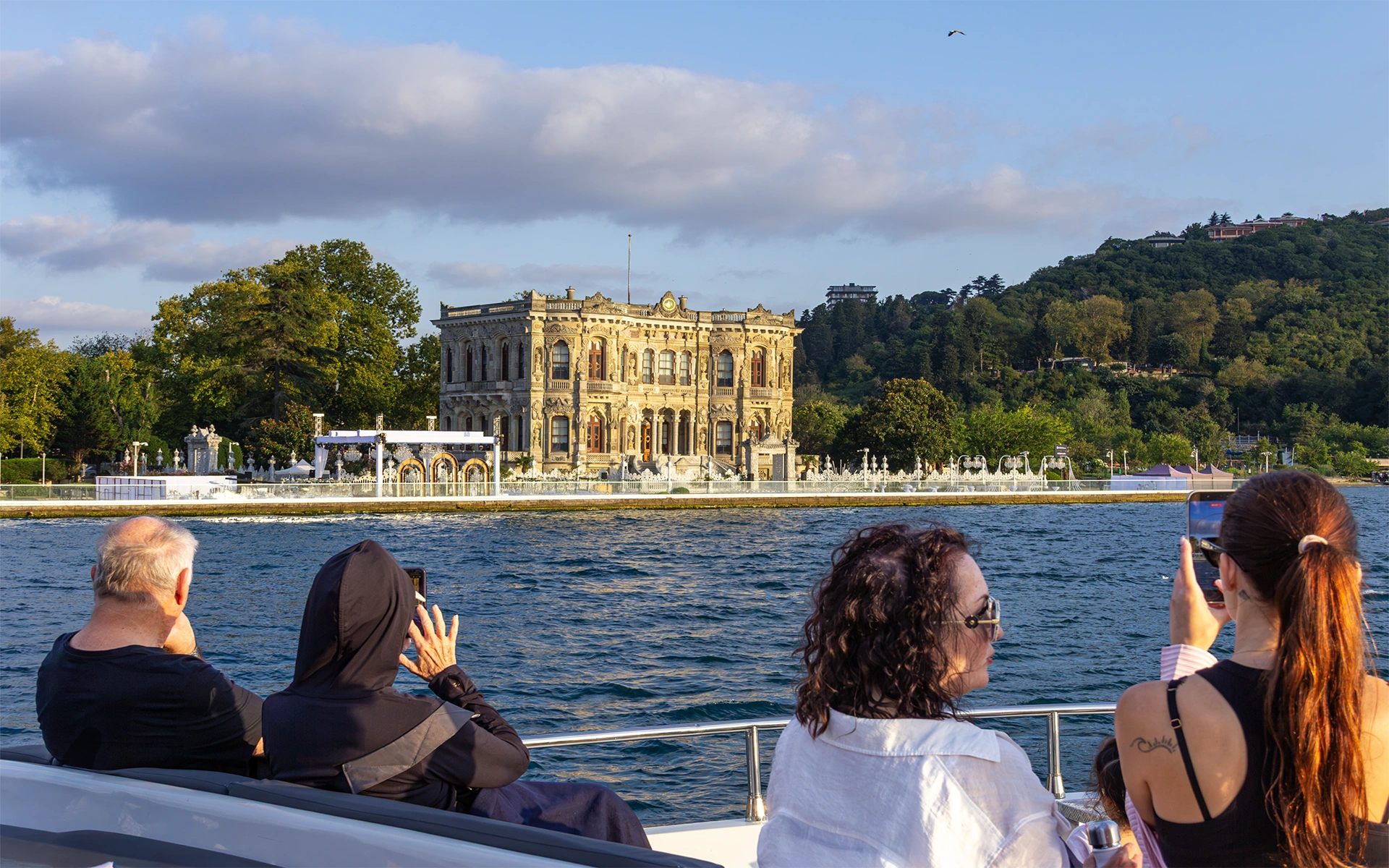
Along the Bosphorus
Staying along the Bosphorus changes the rhythm of the trip.
The city feels more open, ferry use becomes more natural, and the waterfront becomes part of everyday movement rather than an occasional sightseeing experience.
The disadvantage is distance from the Historic Peninsula. Reaching Sultanahmet may require more deliberate planning, especially during busy traffic periods.
For travelers who value the waterfront itself, a Private Bosphorus Yacht Cruise can add another perspective on how the city developed along the strait.
Residential Districts
Areas such as Nişantaşı offer a more contemporary version of Istanbul.
The emphasis shifts away from monuments toward restaurants, cafés, shopping, and everyday metropolitan life. These districts often work better for repeat visitors or longer stays, when immediate proximity to Sultanahmet is no longer the main priority.
The trade-off is straightforward: more local rhythm, but more planning required to reach the historic core.
Choosing the Right Area
For most first-time visitors, Sultanahmet offers maximum proximity, while Karaköy and Galata provide the strongest overall balance between sightseeing and contemporary city life.
Bosphorus districts are better for travelers who value views and waterfront atmosphere, while residential neighborhoods make more sense for longer stays and repeat visits.
The best hotel area is therefore not simply the most central one. It is the area that best matches how the itinerary is structured.
How to Get Around Istanbul Efficiently
Planning a trip to Istanbul without understanding how movement works is one of the easiest ways to lose time.
Distances rarely behave as they appear on a map. Water interrupts continuity, elevation changes walking speed, and road traffic can turn short transfers into long ones. The most efficient approach is usually a combination of tram, metro, ferries, and walking.
Ferries as Structural Corridors
Ferries are not simply scenic. They are part of Istanbul’s everyday transport system and often provide one of the clearest ways to move between districts separated by the Bosphorus or Golden Horn.
For visitors, ferry journeys also make the city easier to understand. Once on the water, relationships between the European and Asian shores, the Historic Peninsula, Karaköy, Beşiktaş, and Üsküdar become much more visible.
Tram and Metro
The tram is especially useful around the Historic Peninsula and central districts, where road traffic can be unpredictable.
Metro lines become more valuable for longer cross-city connections, while ferries often work better when water already separates the areas being visited.
For a full explanation of Istanbulkart, tram, metro, and ferry connections, see our Istanbul Public Transportation Guide.

Road Traffic and Taxis
Traffic is not constant, but it is rarely irrelevant.
A short road journey can expand unexpectedly during busy periods, particularly when crossing between major districts. Taxis are useful, but they should not automatically be treated as the fastest option.
For app-based taxi use and practical advice, see our Taxis in Istanbul & the BiTaksi App.
Walking as Method
Walking remains one of the best ways to experience older parts of Istanbul, especially Sultanahmet, Karaköy, Galata, Fener, and Balat.
The challenge is terrain. Hills, narrow pavements, crowded streets, and long museum visits can make walking more demanding than expected.
Comfortable footwear is therefore not a minor detail. It is part of practical planning.
Build Margin Into the Day
The most effective itineraries leave room between major sights and transfers.
Vehicle access may be restricted around parts of the Historic Peninsula, cruise-ship arrivals can increase pedestrian density around Karaköy, and religious services can temporarily change movement around major mosques.
None of these factors make Istanbul difficult to navigate. They simply reward travelers who plan with margin rather than precision.
The core principle is simple: group districts geographically and choose the transport method that fits the route, rather than using the same method for every journey.
Understanding Safety
Planning a trip to Istanbul often includes questions about safety, particularly for first-time visitors.
Istanbul is a large international city where millions of people move through central districts every day. Areas such as Sultanahmet, Karaköy, Galata, and Beşiktaş remain active well into the evening, and most visitors experience the city without difficulty.
The main concerns are the same ones associated with other busy metropolitan destinations. Crowded transport, major tourist areas, and dense pedestrian streets require normal attention to personal belongings, particularly where pickpocketing can occur.
Taxi use also benefits from basic awareness. Confirming that the meter is running, following the route, and using app-based services when preferred can make urban movement more predictable.
What sometimes feels overwhelming in Istanbul is not necessarily danger, but scale and intensity. Crowds, traffic, unfamiliar streets, and constant movement can make the city feel more complex at first than it actually is.
Standard urban awareness is usually sufficient. Carry selectively, keep valuables secure in crowded areas, and move through the city with confidence rather than unnecessary caution.
Common Planning Mistakes
Planning a trip to Istanbul usually becomes inefficient because of assumptions rather than the city itself.
Compressing the Historic Core
The Historic Peninsula looks compact on a map, but major monuments require time. Trying to combine too many interiors in one day often turns sightseeing into a sequence of queues, security checks, and rushed visits.
Underestimating Topkapı Palace
Topkapı Palace is not a single building. It is an extensive imperial complex of courtyards, chambers, collections, gardens, and the Imperial Harem.
A rushed visit rarely works well. Allowing sufficient time changes the experience completely.

Overscheduling Interiors
Istanbul contains many major indoor sites, but stacking several museums, palaces, mosques, and cisterns back to back can become tiring.
Alternating interiors with walking, neighborhoods, markets, or the Bosphorus usually creates a more sustainable rhythm.
Ignoring Prayer Times
Active mosques operate according to religious schedules, and access can change around daily prayers and especially Friday worship.
This is particularly important when planning visits to major mosques such as the Blue Mosque and Hagia Sophia.
Choosing Accommodation Only by Price
A lower hotel rate can quickly lose its value if it creates longer daily transfers, heavier taxi use, and unnecessary fatigue.
In Istanbul, location often has a greater operational impact than a small difference in nightly cost.
Moving Too Quickly
The city rewards sequence more than speed.
Trying to cover distant districts on the same day often creates more transport than experience. Grouping sights geographically remains the simplest way to reduce friction.
The strongest planning decision is therefore not to add more. It is to remove unnecessary movement.
Structuring Time: When Guidance Becomes Valuable
Planning a trip to Istanbul independently is entirely possible. The city has extensive public transport, major sights are well documented, and many central districts can be explored confidently without assistance.
The point at which guidance becomes valuable is usually not basic navigation, but structure.
A privately guided day can reduce decision fatigue by organizing monument order, transport, entrance timing, and historical context within one sequence. This becomes particularly useful in the Historic Peninsula, where Hagia Sophia, the Blue Mosque, Topkapı Palace, Basilica Cistern, the Hippodrome, and the Grand Bazaar can easily become over-compressed when planned independently.
Our Istanbul Sightseeing Tour is designed around this logic, combining the city’s principal historical areas in a sequence that accounts for geography, site complexity, and realistic daily pacing.
Guidance also becomes more valuable when Istanbul forms part of a wider itinerary. The Istanbul to Cappadocia Tour connects the city with Cappadocia without forcing travelers to rebuild logistics between regions, while the Best of Turkey Tour extends that structure across Istanbul, Cappadocia, Konya, Pamukkale, and Ephesus.
The advantage is not simply having someone lead the way. It is having time, movement, and context organized before the day begins.
For some travelers, that structure creates freedom rather than restriction.

Closing Perspective
Planning a trip to Istanbul begins long before the first sightseeing day.
Where to stay, how many days to spend, and how to move between districts all influence whether the city feels coherent or fragmented. When geography and timing are considered together, Istanbul becomes easier to navigate and far more rewarding to experience.
The objective is not to move faster. It is to move with better sequence.
Allow enough time for major sites, group districts logically, and leave margin between experiences. When structure is in place, the city begins to reveal itself with much greater clarity.
For a broader overview of Istanbul’s history, neighborhoods, major sights, and travel planning, continue with our Istanbul Travel Guide.

FAQ: Planning a Trip to Istanbul
How many days in Istanbul are enough for a first trip?
For most first-time visitors, 3 to 4 days provides a balanced introduction. Two days are enough for a compact overview, while five days or more allow additional time for neighborhoods, museums, the Bosphorus, and more specialized interests.
Where should first-time visitors stay in Istanbul?
Sultanahmet offers the strongest proximity to the Historic Peninsula, while Karaköy and Galata provide a better balance between sightseeing, dining, nightlife, and transport access. Bosphorus districts work well for travelers who prioritize waterfront atmosphere over immediate proximity to the Old City.
Is Istanbul safe for tourists?
Yes. Istanbul is generally safe for visitors who use standard urban awareness. Crowded areas and major transport hubs require normal attention to personal belongings, while app-based taxi services can make road transport more predictable.
What is the best way to plan an Istanbul itinerary?
Group sights geographically and avoid moving repeatedly between distant districts. A strong itinerary usually separates the Historic Peninsula, Karaköy and Galata, the Bosphorus, and more residential neighborhoods into different days or half-day sequences.
What is the best way to get around Istanbul?
A combination of walking, tram, metro, and ferries is usually the most efficient. Taxis can be useful, but they should not automatically be treated as the fastest option during busy traffic periods.
What is the cheapest time to visit Istanbul?
Winter generally offers softer hotel rates and lower visitor density than spring, summer, and early autumn. The trade-off is colder weather, shorter daylight hours, and a greater chance of rain or wind.
WRITTEN BY

Nisa Buket Dağdelen
Operations Director & Tour Guide
LinkedIn Profile

Hüseyin Pekgöz
Founder & Managing Partner
LinkedIn Profile
Adventus Travel Company


